Learn about our sun
The sun is a window into our universe!
By studying the sun, we deepen our understanding of all the other stars you see in the sky & beyond…
Get the latest updates about sun activity!
Get the latest updates about sun activity!!
OUR NEAREST STAR
Learn more about the sun, solar missions, space weather, eclipses & transits, aurora, the heliosphere, and related science.
Rollover each box to learn more…
About the Sun
The Sun is 93 million miles (150 million kilometers) away from the Earth. It’s the only star that humanity has visited.
Solar Missions
Learn about solar missions such as Parker Solar Probe, SDO, SOHO, Stereo & Solar Orbiter. They study the star in our backyard.
Space Weather
Space weather includes any and all conditions and events on the sun, in the solar wind, in near-Earth and in our upper atmosphere.
Eclipses & Transits
A transit is when one object crosses in front of another in space. A transit is called an eclipse when it involves the Sun, Earth & Moon.
Heliosphere
The heliosphere is the sun’s extended atmosphere that surrounds the entire solar system. It is a vast, bubble-like region of space.
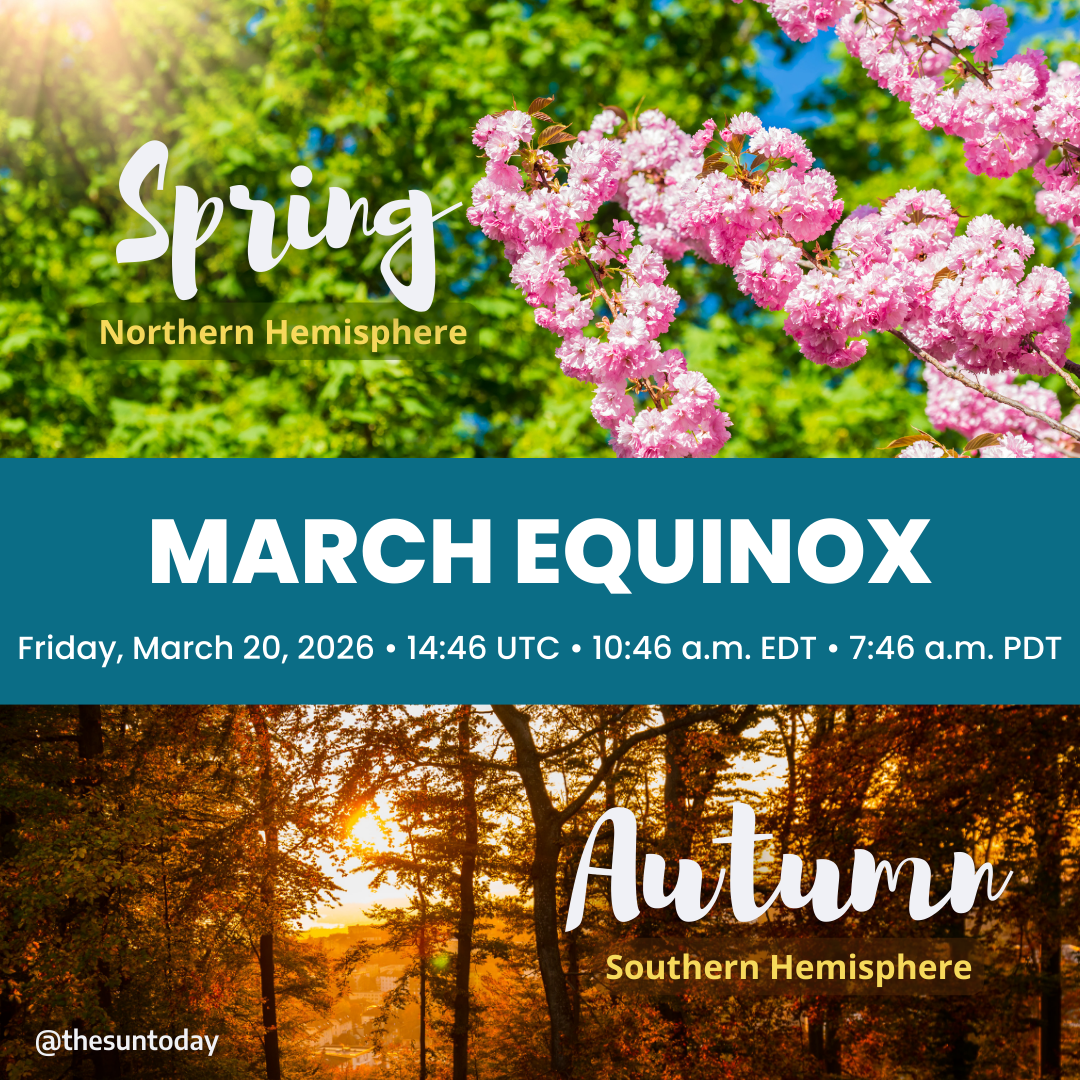
It’s a Change of Season!
The March Equinox arrives on Thursday, March 20, 2025, at 9:01 UTC • 5:01 a.m. EDT • 2:01 a.m. PDT.
Northern Blooms, Southern Leaves

PUNCH Will Reveal How the Sun Shapes Space
PUNCH (Polarimeter to UNify the Corona and Heliosphere) is a groundbreaking NASA mission launched in March 2025. It is tracking how the Sun’s outer atmosphere turns into the solar wind—a constant stream of charged particles that fills the solar system and affects Earth.
Magnetospheric Multiscale (MMS) Mission
NASA’s MMS mission has spent 10 years studying magnetic reconnection, revealing how this process powers space weather events like solar flares and geomagnetic storms.
Want to learn more & the latest news about the Sun? Explore the blog »
FOLLOW US FOR UPDATES!


The Sun Today
It’s solar maximum! Activity is getting very exciting!
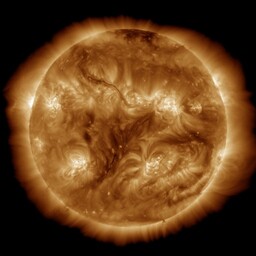
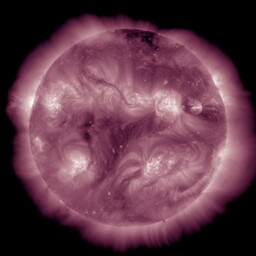
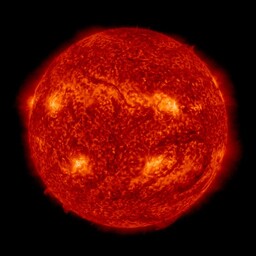
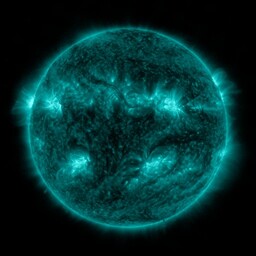
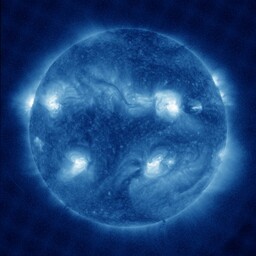
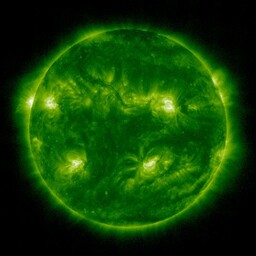
Current observations of the Sun as seen by the Solar Dynamics Observatory (SDO) & the Solar and Heliospheric Observatory (SOHO).
Specialized instruments can observe light far beyond the ranges visible to the naked eye. The “false colors” are chosen to best highlight features in each wavelength.