🌞 Totality Returns to Europe: The Big One of 2026! 🌑🇮🇸🇪🇸
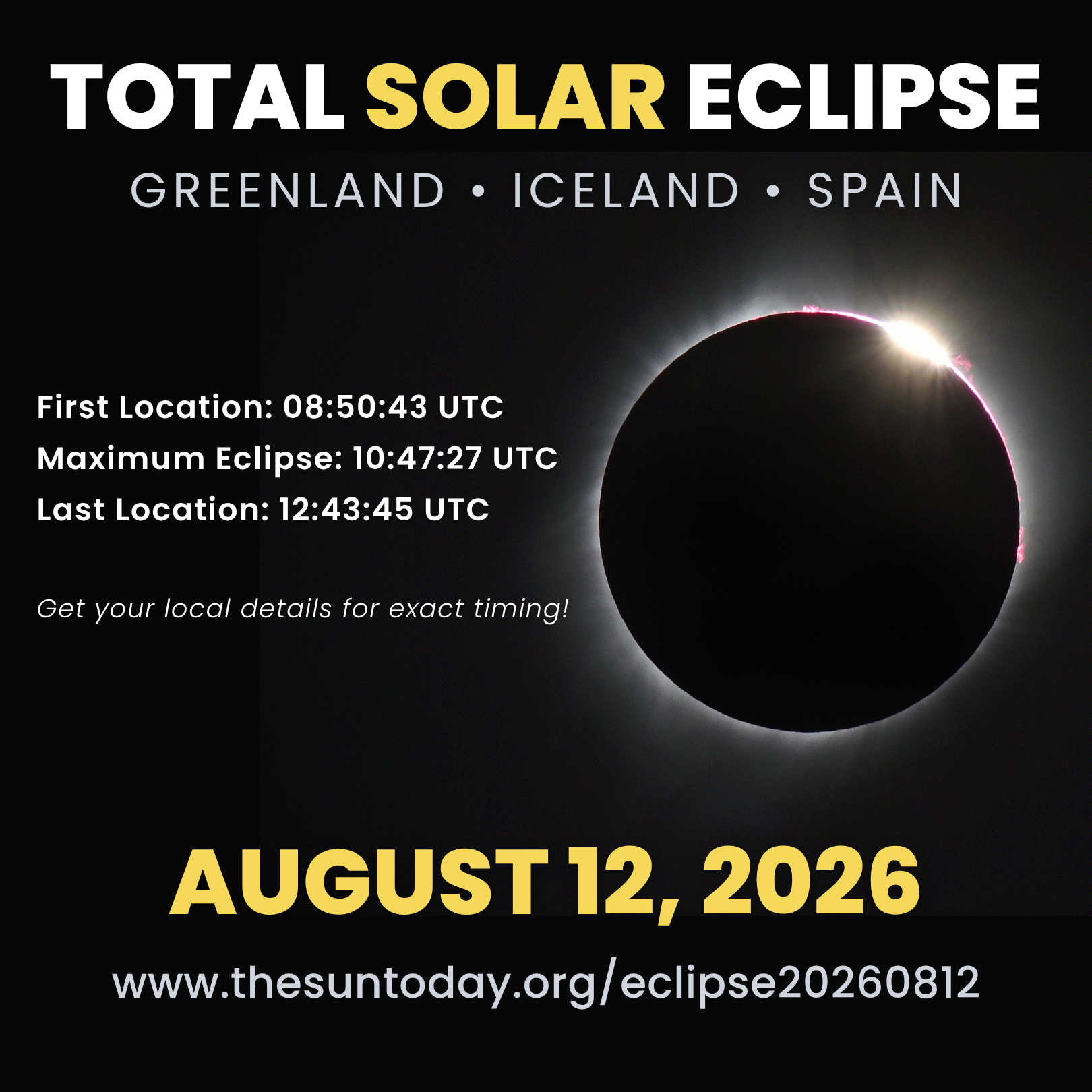
On Wednesday, August 12, 2026, the Moon will pass directly in front of the Sun and cover it completely — plunging the day into an eerie twilight and revealing the Sun’s ghostly outer atmosphere, the corona. This is a total solar eclipse, the headline sky event of the year! ✨🌑
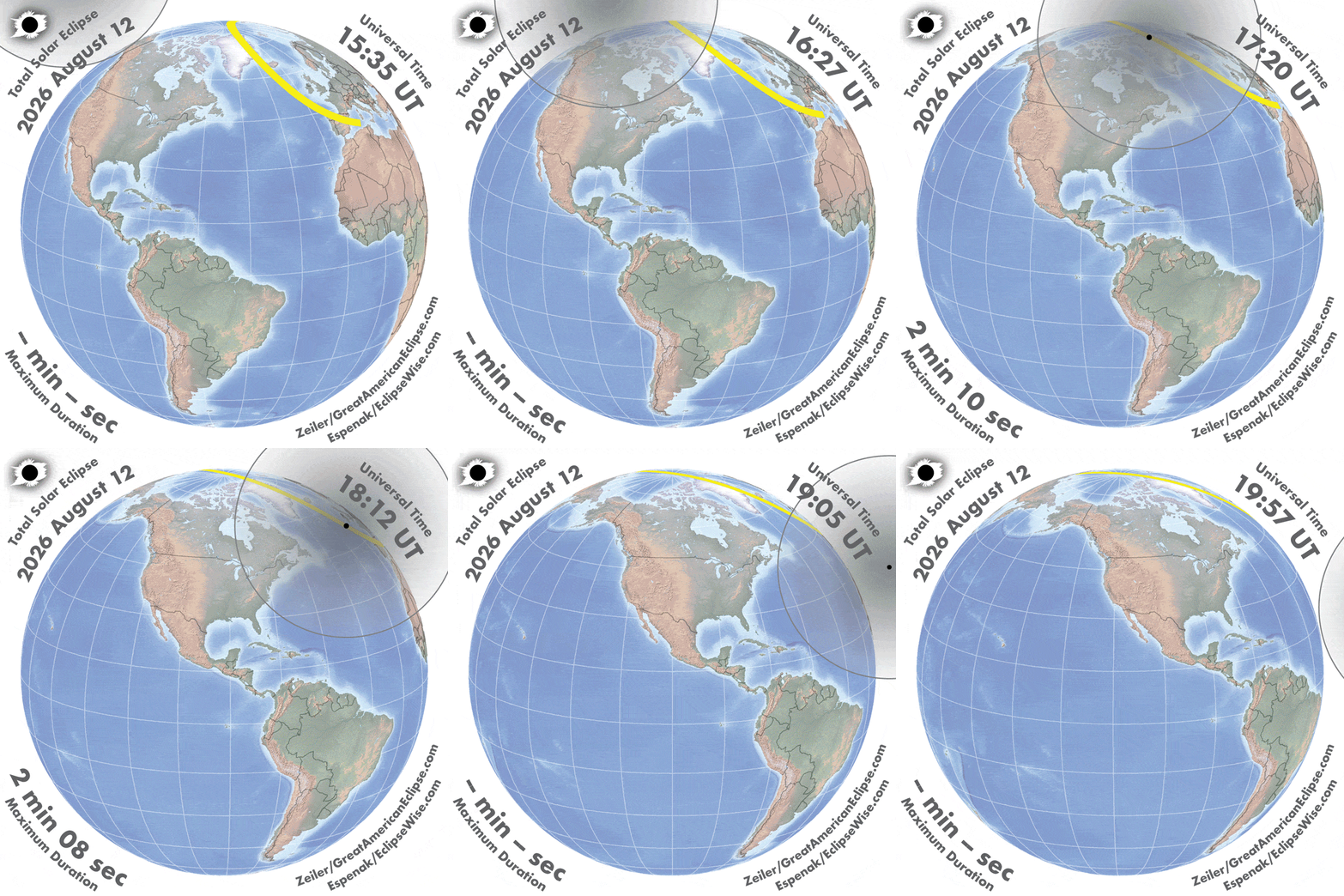
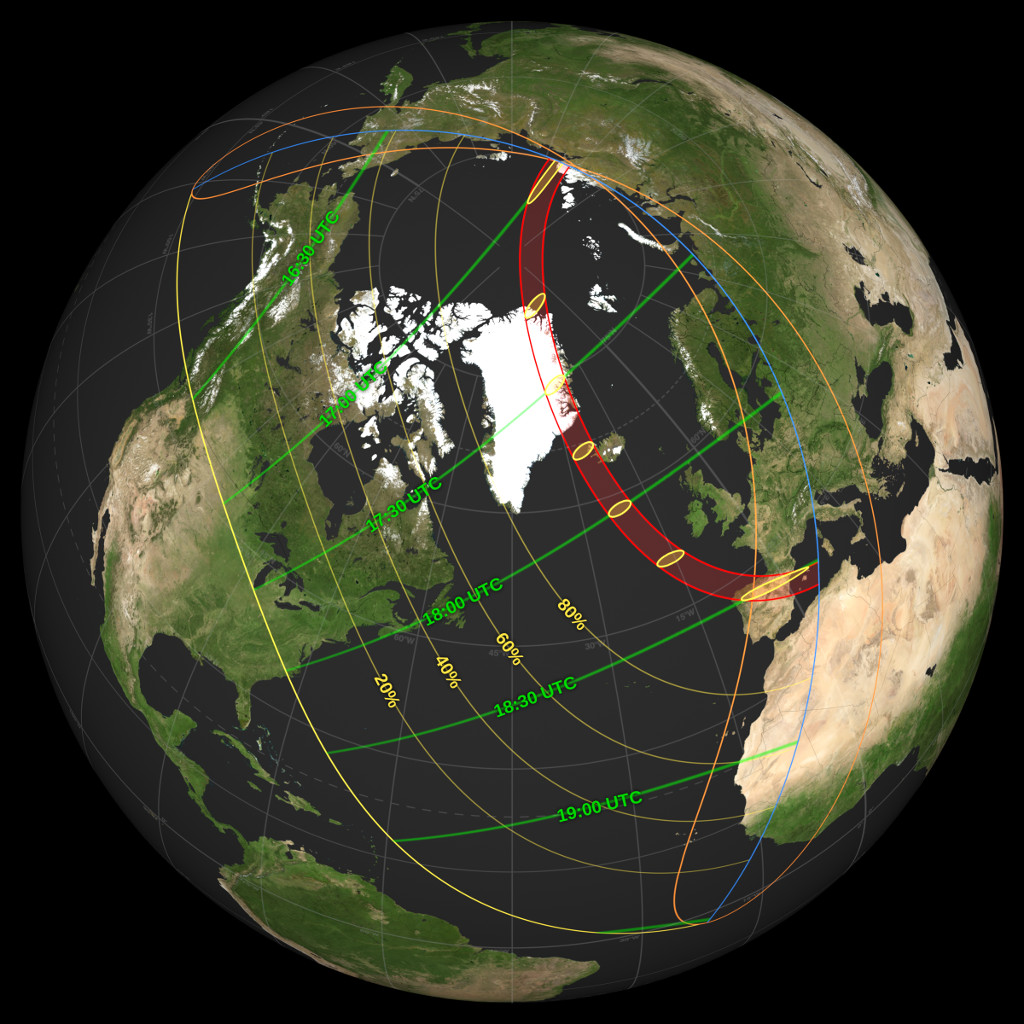
The path of totality sweeps from the Arctic across Greenland and Iceland, then down to northern Spain — the first total solar eclipse visible from continental Europe since March 29, 2006, the first in Spain since 1905, and the first in Iceland since 1954! Unlike February’s penguins-only annular eclipse, this one plays out over land where millions of people can stand in the Moon’s shadow. 🤯
🌟 What Makes This Eclipse Special? 🌑
This is the second solar eclipse of 2026 and the crown jewel of the year’s eclipse calendar. The Moon will appear about 4% larger than the Sun, completely blocking its disk for up to 2 minutes 18 seconds along a path 294 km wide. Roughly 15 million people live inside the path of totality, and nearly a billion people — about 12% of the world’s population — will see at least a partial eclipse. And as a cosmic bonus: the Perseid meteor shower peaks the very next night! ☀️🌑💫
🕒 Timing
The eclipse runs from 15:34 to 19:58 UTC (11:34 a.m.–3:58 p.m. EDT). The Moon’s dark umbral shadow touches Earth for about 1 hour 36 minutes (16:58–18:34 UTC), racing from the Arctic Ocean to the Mediterranean. Greatest eclipse occurs at 17:45:53 UTC just off the western coast of Iceland. In Iceland totality arrives near 17:45 local time; in Spain it comes dramatically late in the day, around 8:30 p.m. CEST, with the eclipsed Sun hanging low over the western horizon — a sunset totality! 🌅🌑
🔭 Where Can You See It?
This time, the Moon’s shadow visits people, not penguins. The path of totality crosses the Arctic, Greenland, Iceland, and northern Spain:
- 🌑 Inside the Path of Totality:
- Iceland — Reykjavík gets ~1 min 1 sec of totality; western Iceland lies closest to the point of greatest eclipse (2 min 18 sec just 45 km offshore!)
- Greenland — the shadow crosses the ice sheet and eastern coast
- Northern Spain — A Coruña, Oviedo (~1 min 49 sec), Bilbao (~31 sec), Zaragoza, Valencia, and Palma de Mallorca, with the Sun low in the evening sky
- 🌤️ Deep Partial Eclipse Views:
- Madrid & Barcelona — just outside the path (Madrid ~99.98% — so close!)
- Western Europe — Lisbon, Paris (~92%), London (~91%), Dublin, and most of the continent
- North America — northeastern U.S. and eastern Canada see a partial eclipse in the afternoon
- North & West Africa — Morocco, Algeria, and neighboring regions
- ❌ No visibility from most of South America, southern Africa, South/East Asia, or Australia
- ☀️ Not in the path? Watch it live online!
Watch the Event Live – Telescope Views & Commentary
Live Broadcast from timeanddate.com –
starting Wednesday, August 12 (time TBA — the partial phases begin at 11:34 am EDT / 15:34 UTC)
Locations Where the Eclipse Is Visible
| Location | Type | Details | Notes |
| 🌑 Path of Totality | |||
| Reykjavík, Iceland | Total Solar Eclipse | ~1 min 1 sec totality | ~17:45 local time |
| Western Iceland (Snæfellsnes area) | Total Solar Eclipse | Closest land to greatest eclipse (2 min 18 sec offshore) | |
| Ittoqqortoormiit, Greenland | Total Solar Eclipse | Shadow crosses Greenland ~17:13–17:40 UTC | |
| A Coruña, Spain | Total Solar Eclipse | Sun low in evening sky | |
| Oviedo, Spain | Total Solar Eclipse | ~1 min 49 sec totality | Among the longest in Spain |
| Bilbao, Spain | Total Solar Eclipse | ~31 sec totality | Near southern edge of path |
| Zaragoza, Spain | Total Solar Eclipse | ||
| Valencia, Spain | Total Solar Eclipse | Sun very low — find a clear western horizon! | |
| Palma de Mallorca, Spain | Total Solar Eclipse | Totality near sunset | |
| 🇪🇸 Iberia — Deep Partial Views | |||
| Madrid, Spain | Partial Solar Eclipse | ~99.98% magnitude | Just outside the path — so close! |
| Barcelona, Spain | Partial Solar Eclipse | Deep partial | Just outside the path |
| Lisbon, Portugal | Partial Solar Eclipse | Deep partial | |
| 🌍 Europe — Partial Views | |||
| London, United Kingdom | Partial Solar Eclipse | ~91% coverage | |
| Paris, France | Partial Solar Eclipse | ~92% coverage | |
| Dublin, Ireland | Partial Solar Eclipse | Deep partial | |
| Berlin, Germany | Partial Solar Eclipse | ||
| Rome, Italy | Partial Solar Eclipse | ||
| Oslo, Norway | Partial Solar Eclipse | ||
| 🌎 North America — Partial Views | |||
| St. John’s, Canada | Partial Solar Eclipse | ||
| Montréal, Canada | Partial Solar Eclipse | ||
| Boston, USA | Partial Solar Eclipse | Northeastern U.S. only | |
| New York, USA | Partial Solar Eclipse | ||
| 🌍 Africa — Partial Views | |||
| Casablanca, Morocco | Partial Solar Eclipse | ||
| Algiers, Algeria | Partial Solar Eclipse | ||
🎥 NASA Eclipse Visualizations 🛰️
NASA’s Scientific Visualization Studio has produced stunning animations of the Moon’s shadow racing across Earth on August 12, 2026 — including a global shadow-tracking view, a close-up of Iceland & Spain, and a view of the partial eclipse from the United States.
🌍 The Cool Science Behind the Eclipse 🧑🔬
- Why Total and Not Annular? – The Moon is just 2.3 days past perigee (its closest point to Earth), so it appears about 4% larger than the Sun in the sky. That extra apparent size lets the Moon completely cover the Sun’s bright disk, revealing the pearly white corona — the Sun’s million-degree outer atmosphere, visible to the naked eye only during totality. The Moon/Sun diameter ratio is 1.031 — totality! 🌑☀️
- Magnitude Greater Than 1 – Still confused by the terms? Let’s break it down! 📚
- Magnitude (1.0386) is how much of the Sun’s diameter is covered. Greater than 1.0 means the Moon more than covers the Sun — that’s what makes it total!
- Obscuration reaches 100% along the path — the entire disk of the Sun is hidden.
- Compare that to February’s annular eclipse (magnitude 0.963), where the Moon was too small and left a “ring of fire.”
- A High-Arctic Path – This eclipse has a gamma of +0.898, meaning the Moon’s shadow axis passes far north of Earth’s center. That’s why the umbra sweeps over the Arctic, Greenland, and Iceland before sliding down to Spain — and why totality in Spain happens with the Sun low on the western horizon near sunset. The path of totality is 294 km wide, covering 5,157 miles across Earth’s surface. 🌐
- Perseids Bonus! – The Perseid meteor shower peaks the very next night (August 12–13). With the Moon at new phase (that’s why we have an eclipse!), skies will be dark and moonless — perfect for meteor watching after the eclipse. 💫
🕒 Eclipse Timeline (UTC)
| Eclipse Phase | Time (UTC) | What’s Happening |
|---|---|---|
| Penumbral First Contact (P1) | 15:34 | Moon’s outer shadow first touches Earth — eclipse begins |
| Central Line Begins (C1) | 17:00 | Totality first touches Earth over the Arctic Ocean! 🌑 |
| Greatest Eclipse | 17:45:53 | Peak — 2 min 18 sec of totality just off western Iceland. Sun at 25.8° altitude |
| Central Line Ends (C2) | 18:32 | Totality leaves Earth near the Balearic Islands at sunset 🌅 |
| Penumbral Last Contact (P4) | 19:58 | Moon’s shadow leaves Earth — eclipse is over |
📐 Detailed Eclipse Parameters
| Event | Time (UTC) |
|---|---|
| Penumbral First Contact (P1) | 2026 Aug 12 — 15:34:11 |
| Umbral First External Contact (U1) | 2026 Aug 12 — 16:58:06 |
| Central Line Begins (C1) | 2026 Aug 12 — 17:00:04 |
| Greatest Eclipse | 2026 Aug 12 — 17:45:53 |
| Central Line Ends (C2) | 2026 Aug 12 — 18:32:09 |
| Umbral Last External Contact (U4) | 2026 Aug 12 — 18:34:05 |
| Penumbral Last Contact (P4) | 2026 Aug 12 — 19:57:57 |
| Parameter | Value |
|---|---|
| Eclipse Magnitude | 1.03863 |
| Eclipse Obscuration | 1.07876 (100% of the Sun’s disk hidden during totality) |
| Gamma | +0.89774 |
| Moon/Sun Diameter Ratio | 1.031 |
| Maximum Duration of Totality | 2 min 18.2 sec |
| Path Width at Greatest Eclipse | 294 km |
| Sun Right Ascension | 09h 29m 47.3s |
| Sun Declination | +14°48′04.5″ |
| Sun Semi-Diameter | 15′47.0″ |
| Sun Equatorial Horizontal Parallax | 08.7″ |
| Moon Right Ascension | 09h 31m 17.3s |
| Moon Declination | +15°36′58.5″ |
| Moon Semi-Diameter | 16′16.9″ |
| Moon Equatorial Horizontal Parallax | 0°59′45.1″ |
| ΔT | 72.4 s |
🔄 Saros 126: A Veteran Series Still Delivering ⏳
This eclipse belongs to Solar Saros 126 — a family of eclipses that has been producing events since March 10, 1179. This is member 48 of 72 in the series, which will produce its final eclipse on May 3, 2459.
Saros 126 began with partial and annular eclipses and has matured into its total eclipse phase. The previous eclipse in this family was the total eclipse of August 1, 2008, which crossed the Arctic, Siberia, and China — and the next will be August 23, 2044, crossing Greenland and western Canada. Notice the pattern? Each Saros member arrives 18 years and 11 days after the last, with the path shifting westward around the globe. 🌐
🚀 How to Watch Safely 👓
IMPORTANT! During the partial phases — before and after totality — the Sun is never safe to view with the naked eye. Only during the brief moments of totality itself, when the Moon completely covers the Sun’s disk, is it safe to look without protection. The instant the Sun begins to reappear, filters go back on! 🚫👓
- 🌟 Eclipse Glasses – Must be certified ISO 12312-2. Wear them for ALL partial phases! 🕶️
- 🌑 During Totality Only – Once the Sun’s disk is completely covered, you may safely look with the naked eye and marvel at the corona. When the “diamond ring” flashes, glasses back on! 💍
- 🌙 Pinhole Projector – Fun DIY way to safely watch the partial phases! 🎨
- 👁️ Never Use Sunglasses – Regular sunglasses, even very dark ones, don’t protect your eyes! 🚫
- 🌅 In Spain: Scout Your Horizon – Totality comes with the Sun very low in the west. Find a spot with a clear, unobstructed western horizon well ahead of time!
- 💻 Watch Online – Not in the path? Livestreams will bring totality to you! 🌍
PROTECT YOUR EYES!
The Sun is only safe to view with the naked eye during the brief minutes of TOTALITY, when the Moon completely covers the Sun’s disk. At all other times — including every partial phase — you must use proper eye protection. Homemade filters or ordinary sunglasses, even very dark ones, are not safe for looking at the uneclipsed or partially eclipsed Sun. Be sure to carefully read the details to understand how to protect your eyes!
Eclipse Season: What Is It?
Did you know that eclipses don’t just happen randomly throughout the year? They occur in what’s called Eclipse Season! 🌑✨
Eclipse seasons are windows of time when the Sun, Earth, and Moon align just right to create eclipses. Each season lasts for about 34 to 38 days and occurs roughly every six months. During this period, there are typically two eclipses—one solar and one lunar—because of the way the Moon’s orbit intersects the Earth’s orbital plane (called the ecliptic).
The second eclipse season of 2026:
- Total Solar Eclipse on August 12, 2026 ☀️🌑: The headline eclipse of the year! Totality sweeps from the Arctic across Greenland and Iceland to northern Spain — the first total solar eclipse in continental Europe since 2006, in Spain since 1905, and in Iceland since 1954! 🇮🇸🇪🇸
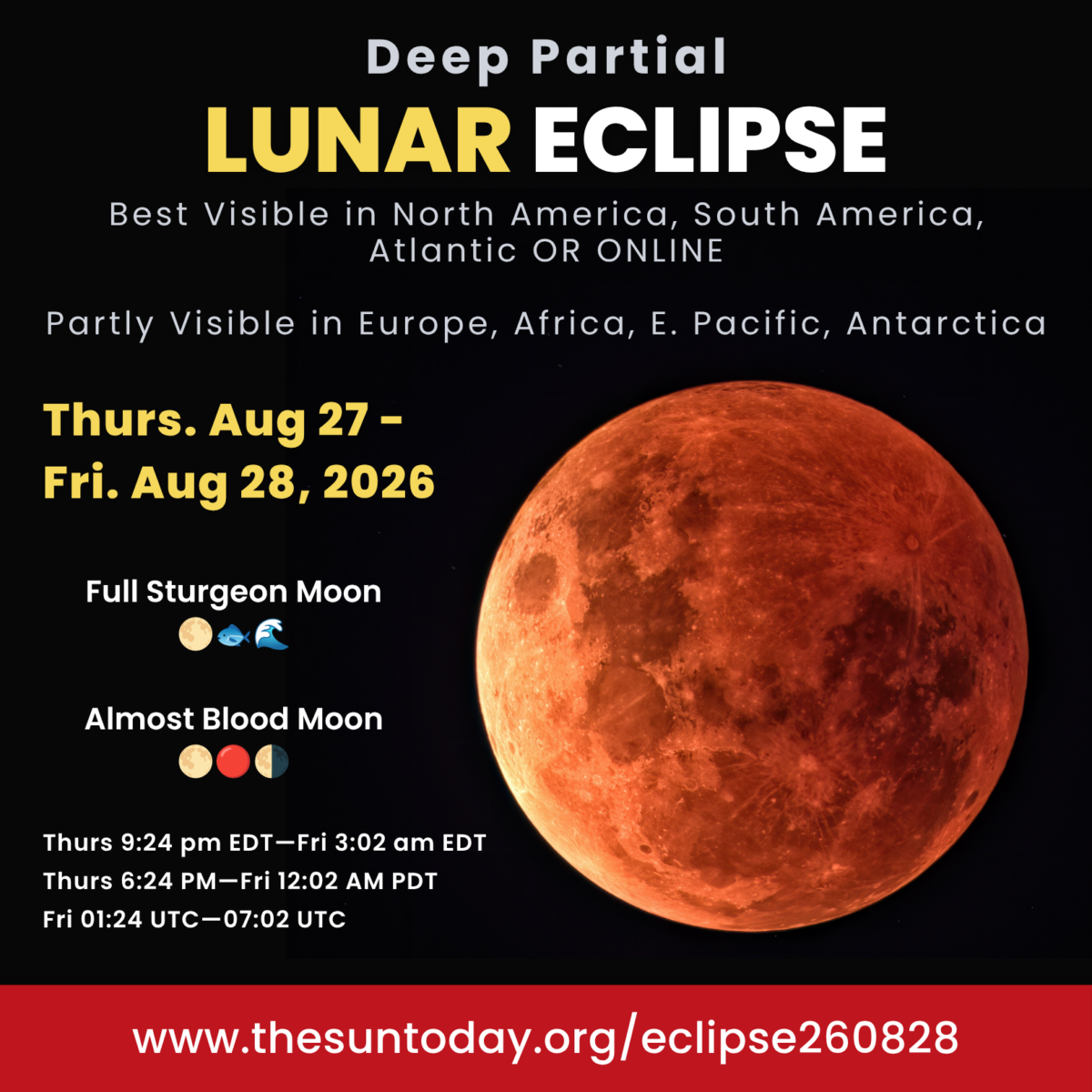
- Partial Lunar Eclipse on August 28, 2026 🌕🌗: Two weeks after totality, the Moon slides partway through Earth’s shadow — visible across the Americas, Europe, Africa, and parts of Asia.
Earlier in 2026, the first eclipse season delivered:
- Annular Solar Eclipse on February 17, 2026 ☀️💍: An extraordinary “ring of fire” eclipse confined almost entirely to Antarctica — one of the most remote central eclipses in modern history, witnessed in person by only a handful of researchers (and a lot of penguins 🐧).
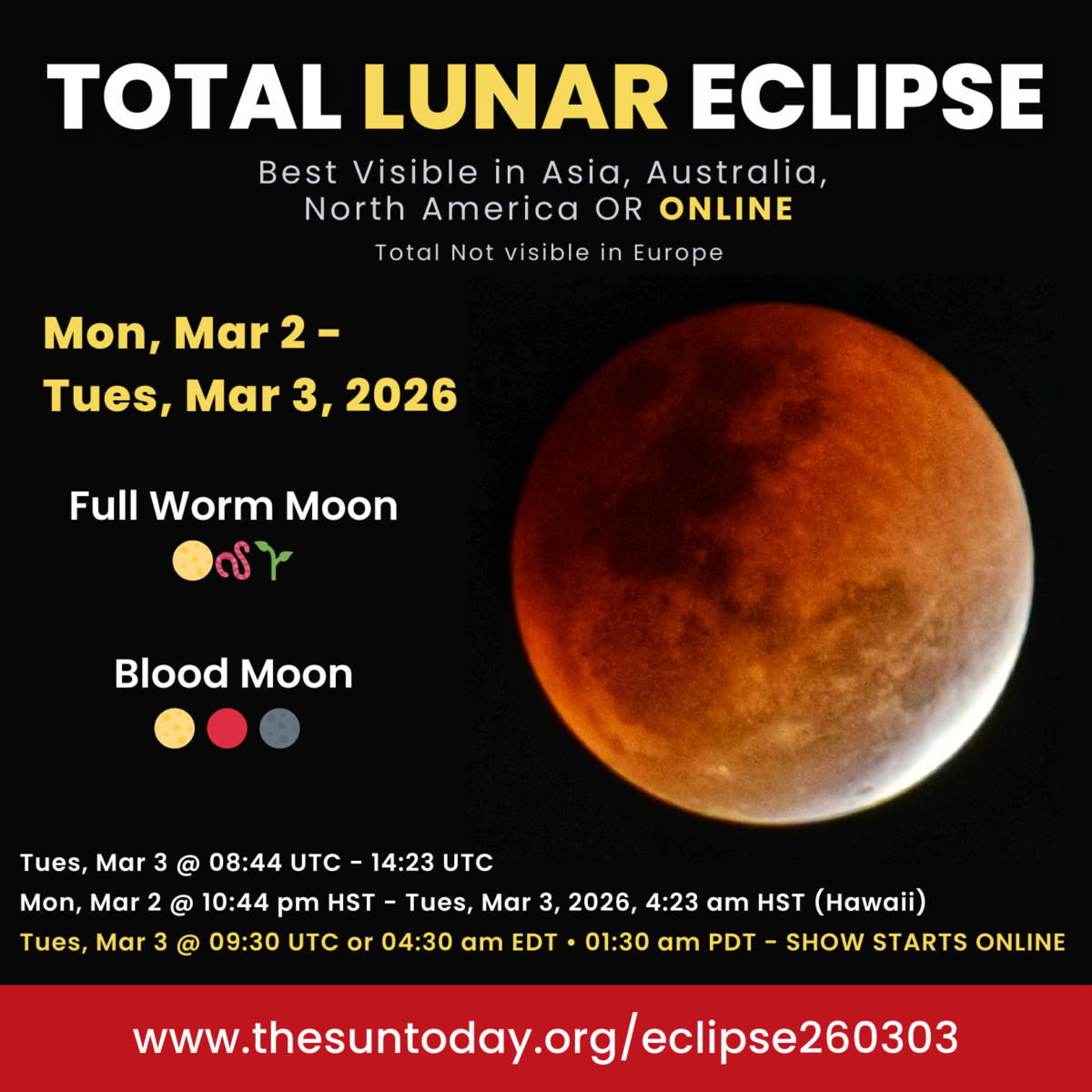
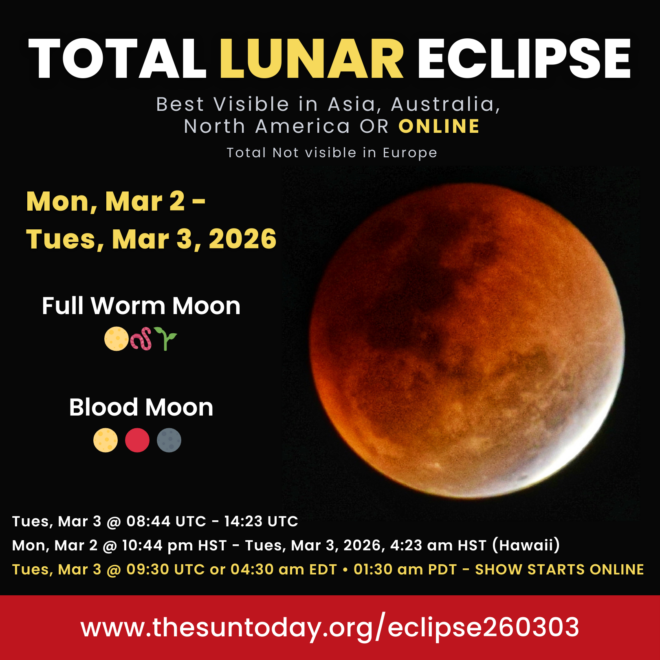
- Total Lunar Eclipse on March 3, 2026 🌕🌑: A spectacular Blood Moon visible across the Pacific Rim — the last total lunar eclipse until late 2028!
Don’t miss out on these cosmic spectacles, either in person or watching online! 🌞🌑
🌑 From Penguins to People
What a contrast 2026 offers! February’s annular eclipse played out before an audience of Antarctic researchers and emperor penguins. Six months later, the same elegant orbital clockwork delivers totality to millions across Iceland and Spain — with nearly a billion people catching at least a partial eclipse. Same Moon, same Sun, wildly different show. ✨🌍
🌞 Final Thoughts: This Is the Big One! 🌑
The August 12, 2026 total solar eclipse is the most anticipated sky event of the year — the first totality over continental Europe in two decades, a sunset spectacle in Spain, a midnight-sun-season marvel in Iceland, and a warm-up act for the “Eclipse of the Century” on August 2, 2027, which will bring over 6 minutes of totality to North Africa and the Middle East. 🌞✨
Whether you’re chasing the shadow to Reykjavík, staking out a western horizon in Valencia, watching a deep partial from London or Boston, or streaming it from home — this is the one to plan for. Book early, check the weather, pack your eclipse glasses, and don’t forget to stay up for the Perseids afterward! 🌑🔭💫
🔗 For More Info:
For a closer look at the eclipse path, times, and maps, head over to these awesome resources:
- The Sun Today: Total Solar Eclipses
- Time and Date: August 12, 2026 Total Solar Eclipse
- EarthSky: Total Solar Eclipse of August 12, 2026
- EclipseWise: August 12, 2026
- NASA SVS: Eclipse Animations
- NASA SVS: Eclipse Map
🌞🌑 Stay safe, stay curious, and enjoy the eclipse magic! 🌟