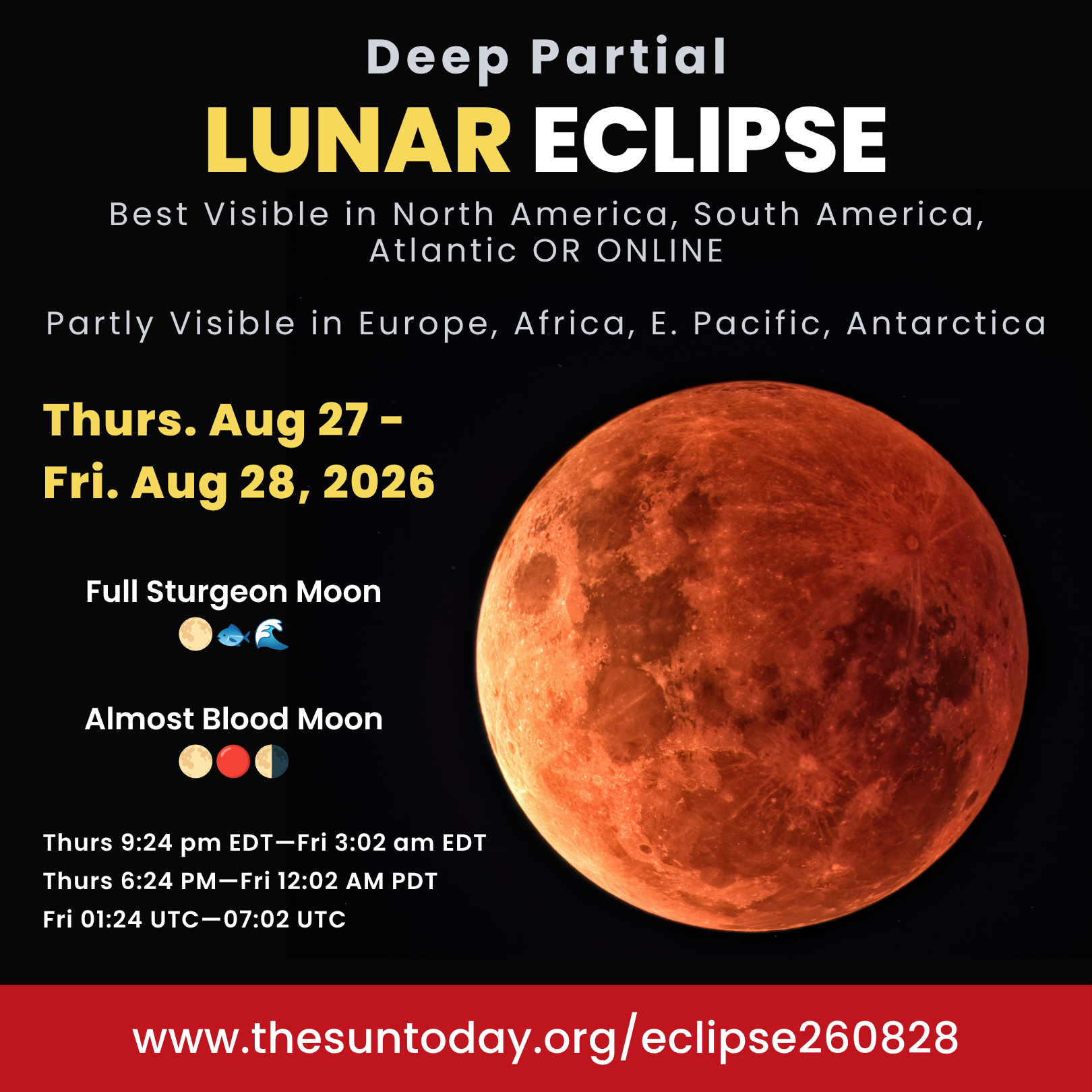
🌕🌗 Deep Partial Lunar Eclipse: August 28, 2026!
93% of the Moon slips into Earth’s shadow — an “almost Blood Moon” just 16 days after the total solar eclipse!
🌟 Key Features of the Eclipse:
- Date: Friday, August 28, 2026 (the evening of Thursday, August 27 for the Americas)
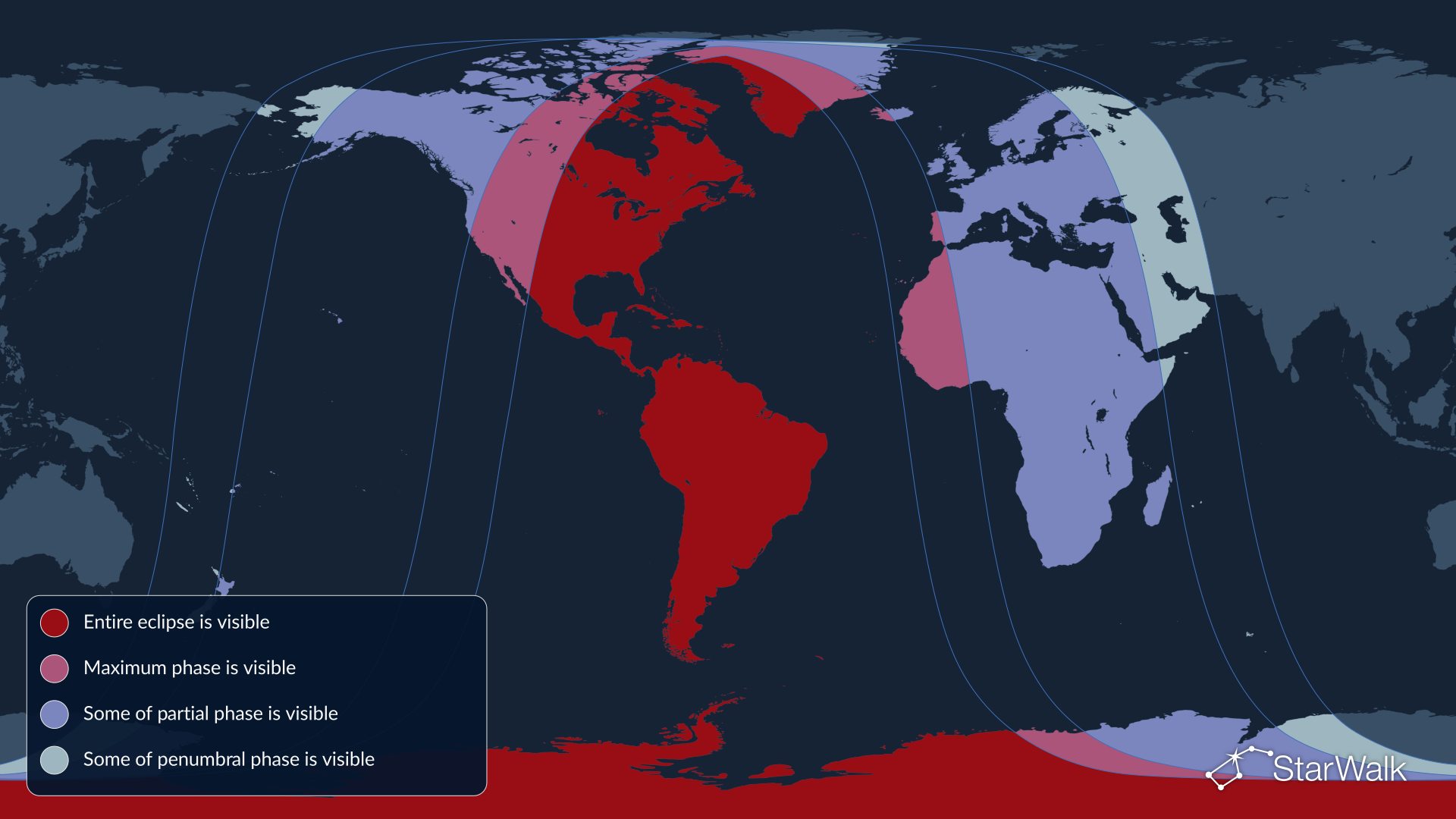
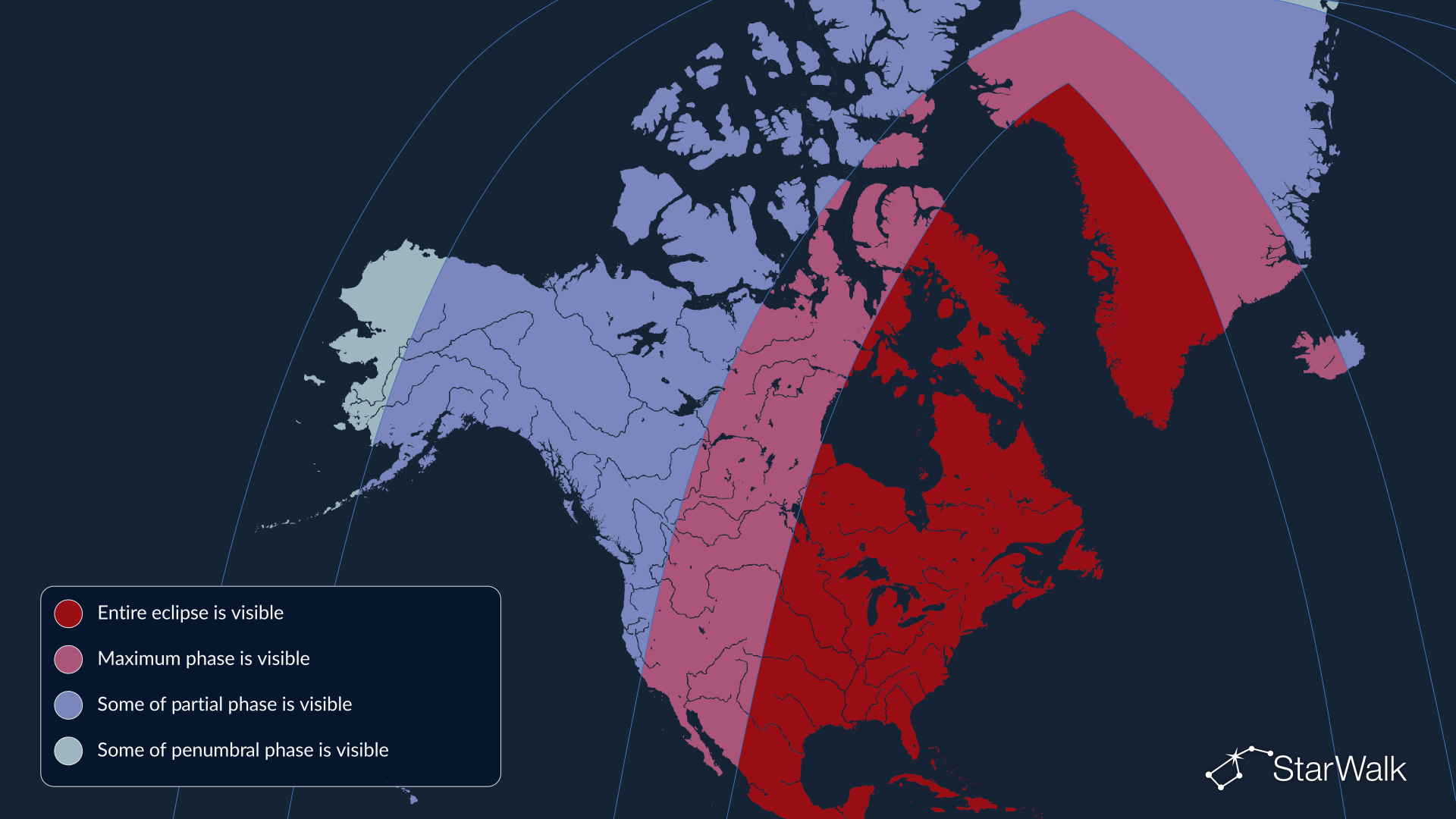
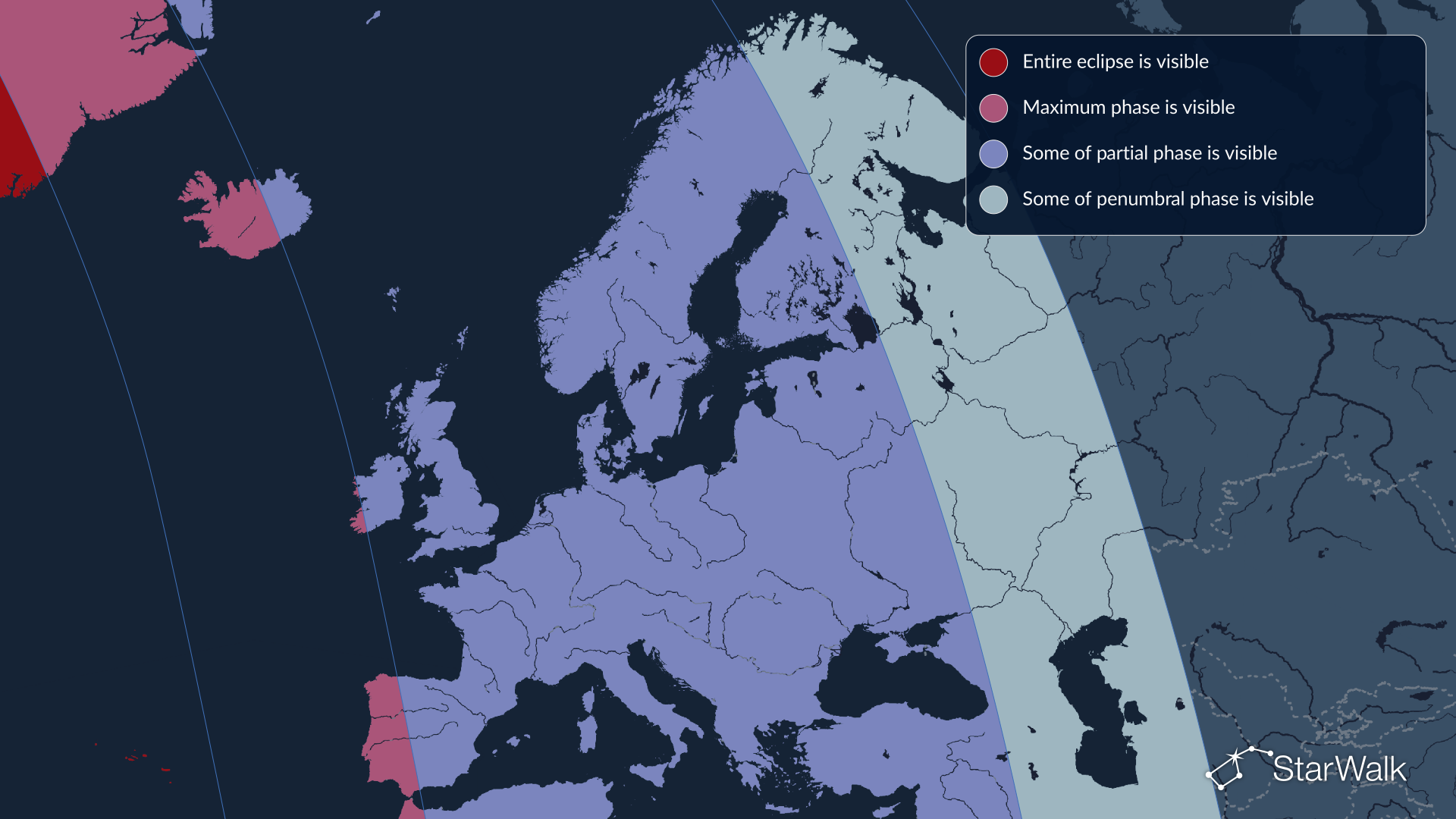
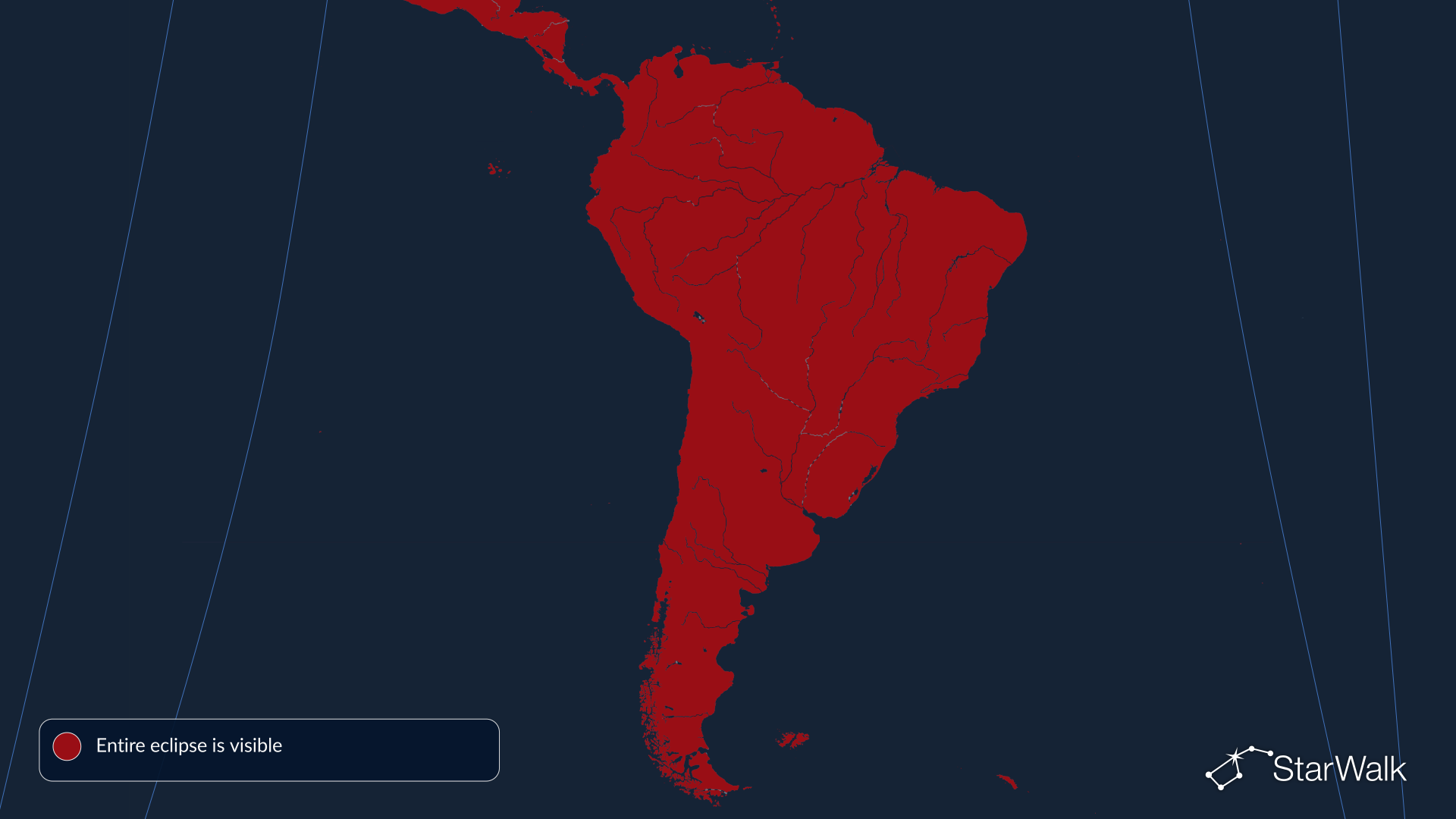
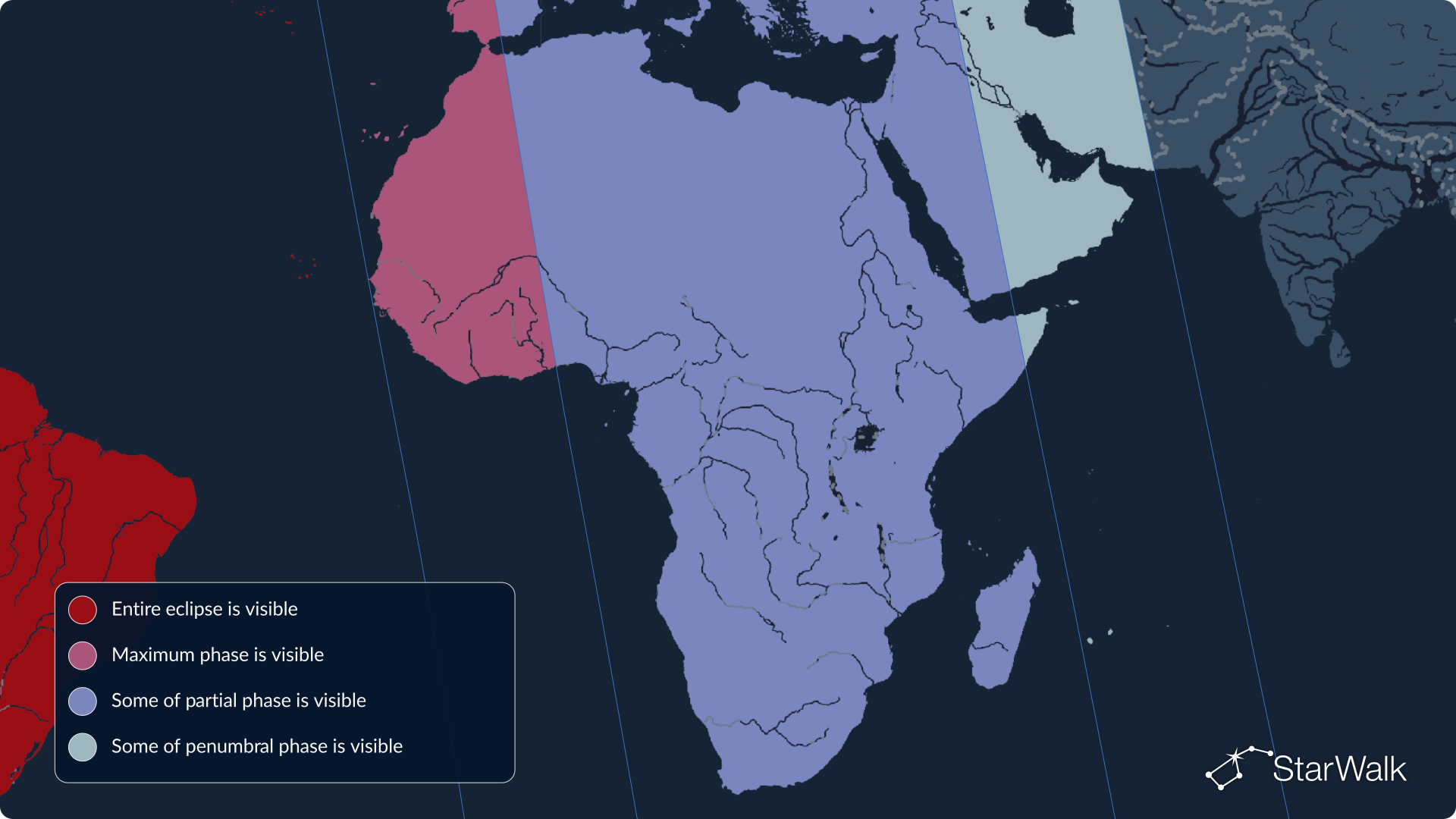
- Visible to: The Americas (the whole show!), Europe, Africa, and the Middle East at moonset, the central Pacific at moonrise 🌎🌍
- Coverage: At maximum, ~93% of the Moon’s diameter (96% of its area!) is immersed in Earth’s dark umbra 🌗
- Color: Expect deep red-copper tones across most of the disk, with a brilliant sliver of the Moon’s northern edge staying bright! 🔴✨
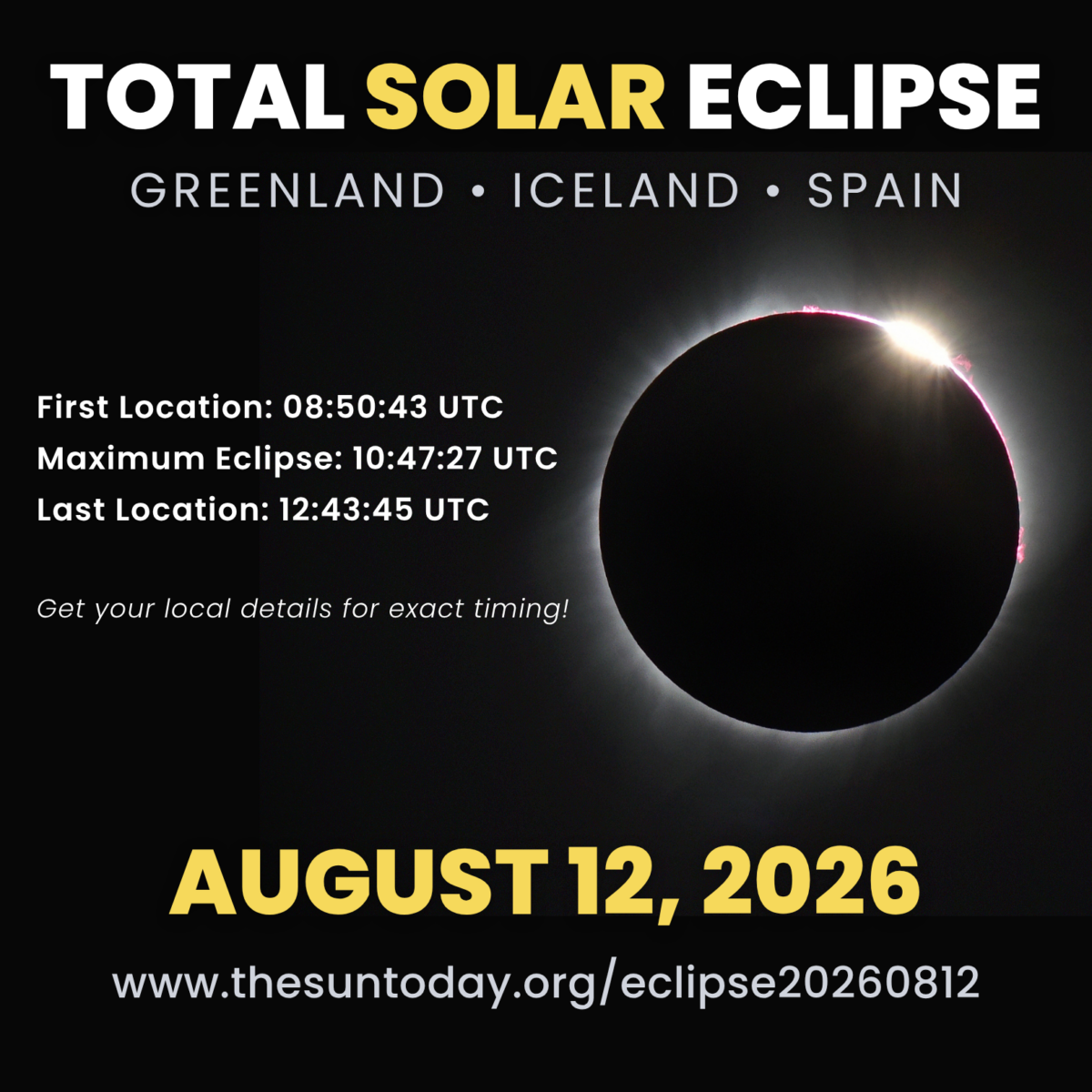
- Bonus: This is the closing act of 2026’s spectacular second eclipse season — just over two weeks after the August 12 total solar eclipse! ☀️🌑
A partial lunar eclipse occurs when the Earth’s shadow covers part — but not all — of the Moon. 🌍➡️🌗 This one is a very deep partial: so much of the Moon plunges into the umbra that it will look strikingly like a total eclipse, with rich reddish hues over most of the lunar face. This full moon is the Sturgeon Moon — named for the giant fish of the Great Lakes that were most readily caught in late summer. 🐟🌕
Watch the Event Live – Telescope Views & Commentary
Live Broadcast from timeanddate.com –
starting Friday, August 28: ~01:00 UTC • Thursday, August 27: 9:00 pm EDT • 6:00 pm PDT (time TBA)
🌗 When & Where to Watch In-Person
- Best views: North and South America see the entire eclipse from start to finish under a high Moon — from Canada and the US to Mexico, Brazil, Argentina, and Chile 🌎
- Moonrise eclipse: Hawaii, Alaska, and the central Pacific see the Moon rise with the eclipse already underway — a dramatic sight on the eastern horizon! 🌅🌗
- Moonset eclipse: Europe, Africa, and the Middle East catch the eclipsed Moon sinking toward the western horizon in the early morning hours of August 28
- Not visible: Most of East Asia and Australia miss this one ❌
- You don’t need a fancy telescope to witness this! Just head outside, look up, and enjoy the view.
- If you want to enhance your experience, binoculars or a small telescope can bring the details into sharper focus. 🔭👁️
Unlike a solar eclipse, the timing of the lunar eclipse is the same for everyone in the viewing area, just adjusted to your time zone.
An estimated ~3.3 billion people can observe the partial phase — and nearly a billion can watch the entire eclipse from start to finish! 🌍
Additionally, times are provided in UTC or GMT as the standard time.
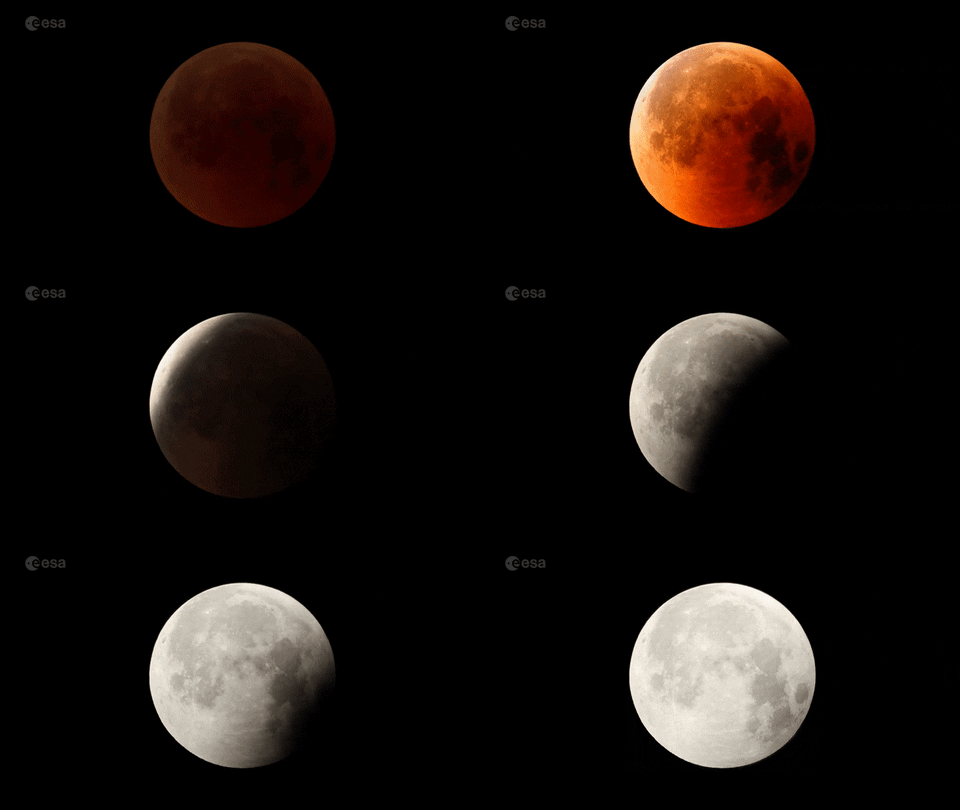
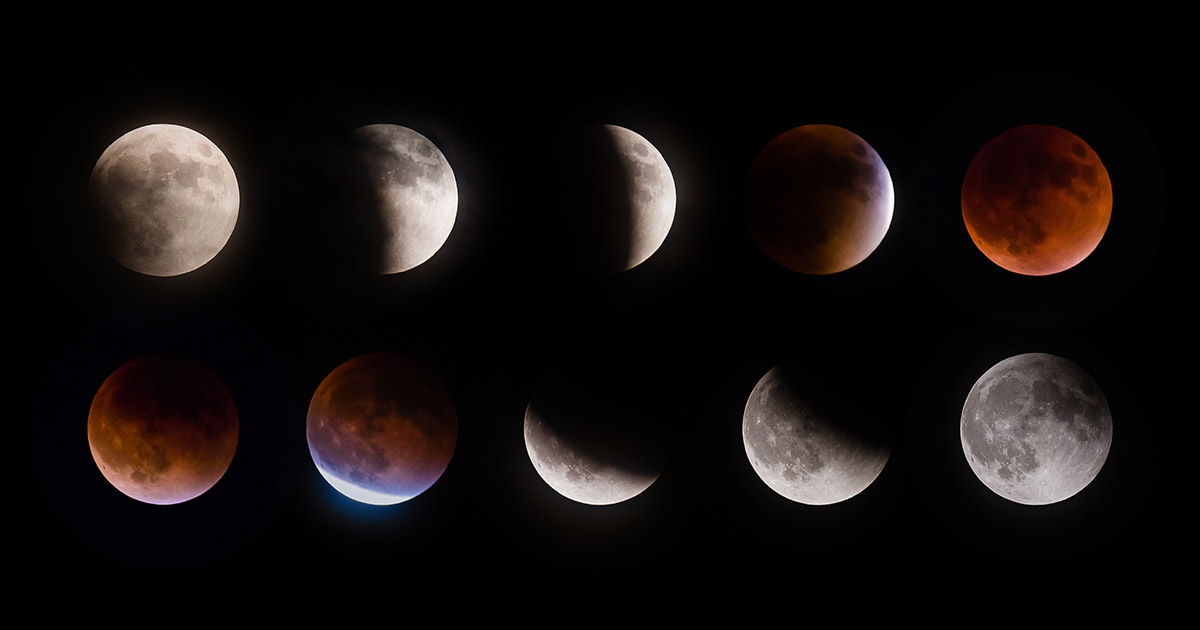
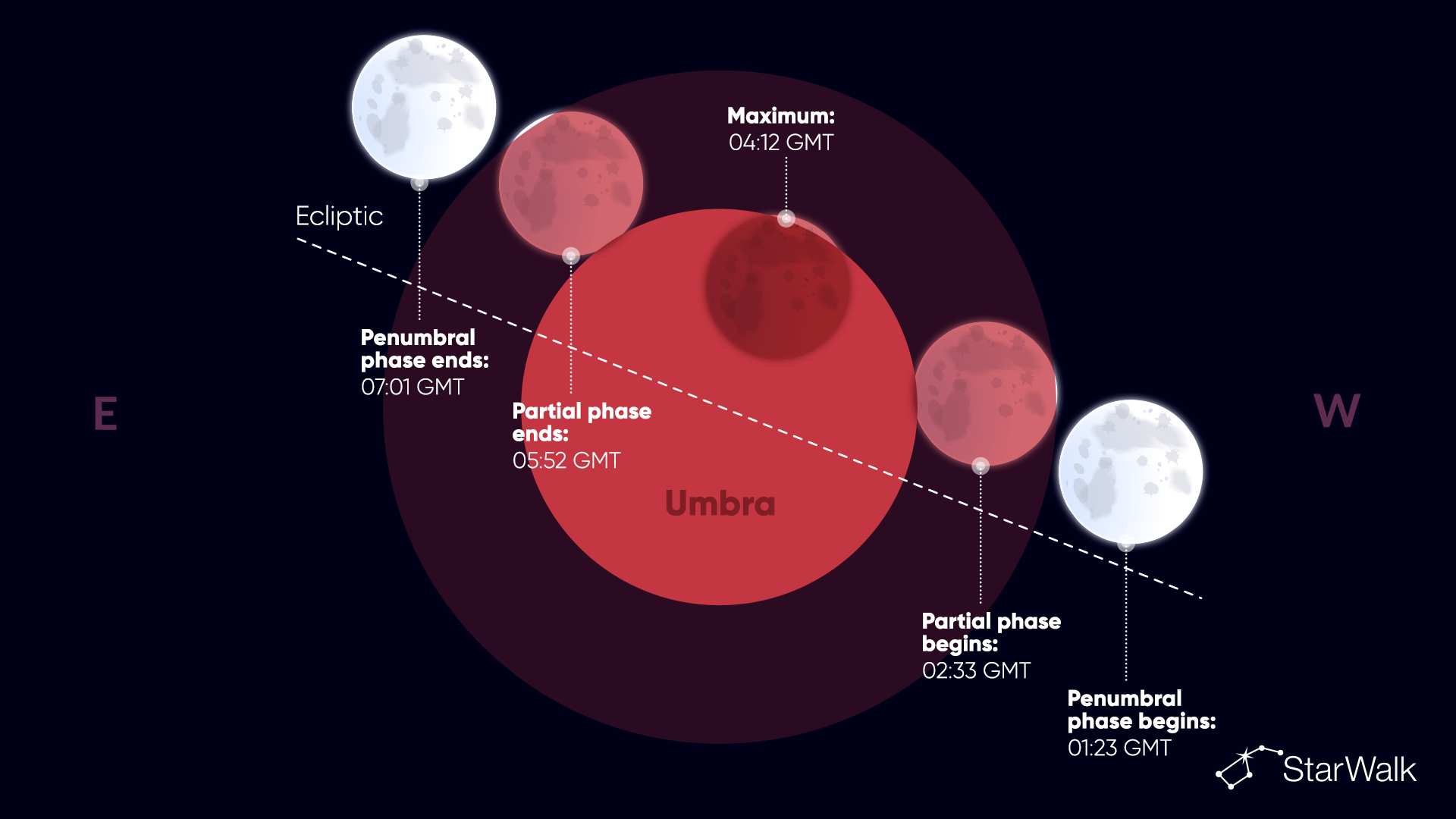
The real action begins when the Moon starts to disappear as it enters the umbra at about 02:34 UTC. By 04:13 UTC, 93% of the Moon is buried in shadow — a ghostly copper disk with a single dazzling bright edge.
| Partial Lunar Eclipse Phase | UTC | CEST (Europe) | EDT | PDT |
| Penumbral Eclipse Begins Not much to see yet! The outer edge of the Earth’s shadow is called the penumbra. It is barely noticeable by the naked eye when the Moon passes through it. The light only dims by a couple of %. It’s not a particularly interesting part of a lunar eclipse. |
01:24 (Aug 28) |
3:24 am (Aug 28) |
9:24 pm (Aug 27) |
6:24 pm (Aug 27)** |
| Partial Eclipse Begins The real action begins when the bright full Moon begins to be covered by Earth’s darker shadow (umbra). The bright full Moon may appear white, but with a fuzzy shadow blocking part of it — watch the dark bite grow and grow! |
02:34 (Aug 28) |
4:34 am (Aug 28) |
10:34 pm (Aug 27) |
7:34 pm (Aug 27)** |
| Greatest Eclipse The peak of the show! About 93% of the Moon’s diameter is immersed in the umbra. Most of the disk glows a deep red-copper while a thin sliver of the northern limb blazes bright white — a striking contrast you’ll never see at full moon otherwise. If you only have time to look at one part, this is what to aim for. |
04:13 (Aug 28) |
6:13 am (Aug 28)* |
12:13 am (Aug 28) |
9:13 pm (Aug 27) |
| Partial Eclipse Ends The show is over for most sky watchers! The Moon has moved completely out of the umbra. If viewing with your naked eye, this is a good place to stop watching. The Moon will be moving through the penumbra, but it is difficult to see this, as the light change is only a few %. |
05:52 (Aug 28) |
7:52 am (Aug 28)* |
1:52 am (Aug 28) |
10:52 pm (Aug 27) |
| Penumbral Eclipse Ends Not much to see here! The official eclipse is over when the Moon completely leaves the outer edge of the Earth’s shadow. |
07:02 (Aug 28) |
9:02 am (Aug 28)* |
3:02 am (Aug 28) |
12:02 am (Aug 28) |
* Moon may be setting or below the horizon for European locations — the farther west, the more you’ll see. Check your local moonset time!
** Moon still below the horizon on the US West Coast — it rises around sunset with the eclipse already underway.
To find out the eclipse times for your location check out timeanddate.com.
What is a lunar eclipse?
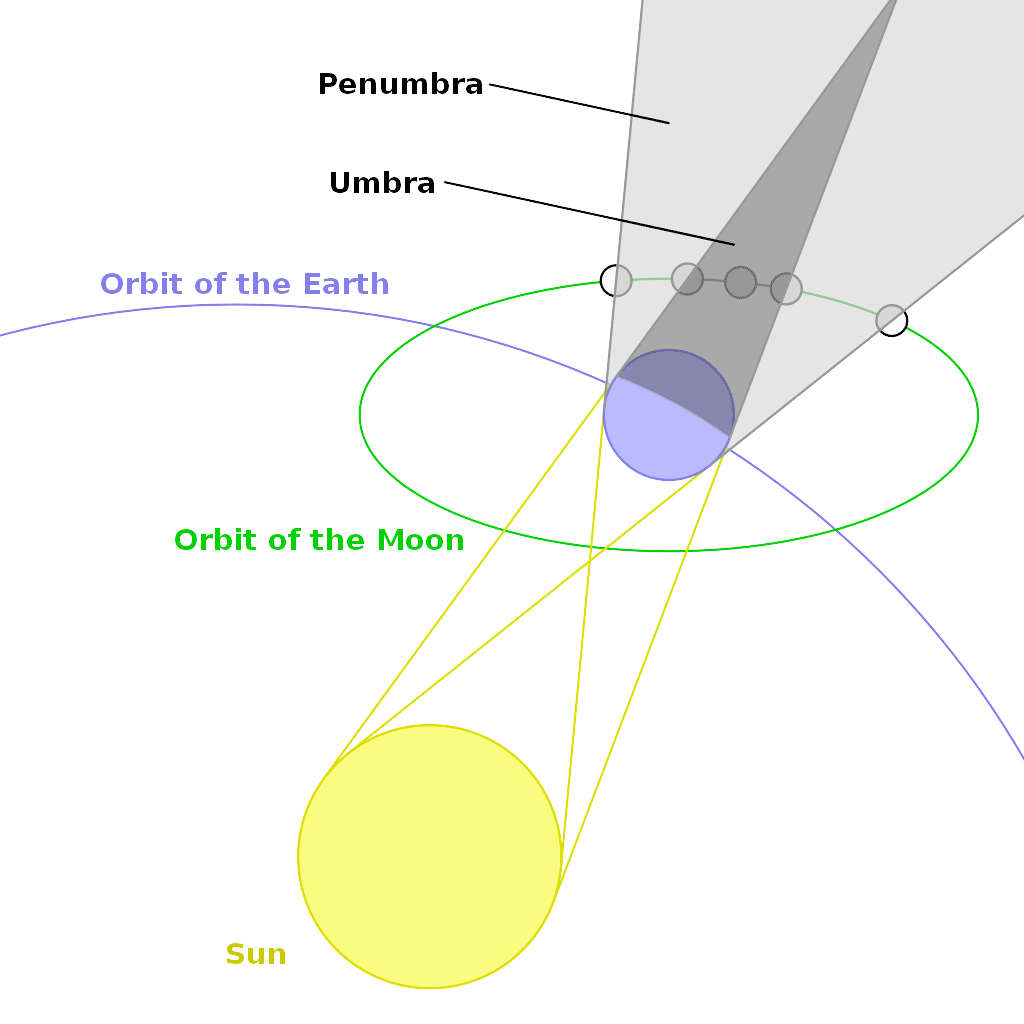
Earth’s shadow can be divided into two distinctive parts: the umbra and penumbra.
Earth totally occludes direct solar radiation within the umbra, the central region of the shadow. However, since the Sun’s diameter appears about one-quarter of Earth’s in the lunar sky, the planet only partially blocks direct sunlight within the penumbra, the outer portion of the shadow.
Within the umbra, the central region, the planet totally shields direct sunlight. In contrast, within the penumbra, the outer portion, the sunlight is only partially blocked.
In the diagram, the Sun, Moon, and Earth sizes nor the distances between the bodies are to scale.
🚀 The Science Behind the Red Glow 🔴
Why does the eclipsed part of the Moon turn red?
The key is Rayleigh scattering. As sunlight passes through Earth’s atmosphere, shorter wavelengths (like blue light) scatter, leaving the longer wavelengths (like red) to illuminate the Moon. 🌇 This causes the shadowed portion of the Moon to glow in shades of orange and red. 🧡❤️ Even though this eclipse stops just short of totality, ~93% of the Moon will be inside the umbra at maximum — deep enough for those rich red tones to develop across most of the disk!
It’s a truly magical sight! 🌟
The Moon is red during a lunar eclipse because of the same effect that creates sunrises and sunsets.
Colors of shorter wavelengths like blue are scattered more by Earth’s atmosphere than the longer wavelengths like red. When the Sun is low in the sky during sunrise and sunset the light travels through more atmosphere so more of the blue light is scattered leaving more red light. When Earth blocks the light from the Sun during a lunar eclipse the edge of Earth has a glow like a sunrise or a sunset from the scattered light in the atmosphere. This is what gives the shadow on the Moon during the eclipse its reddish tint.
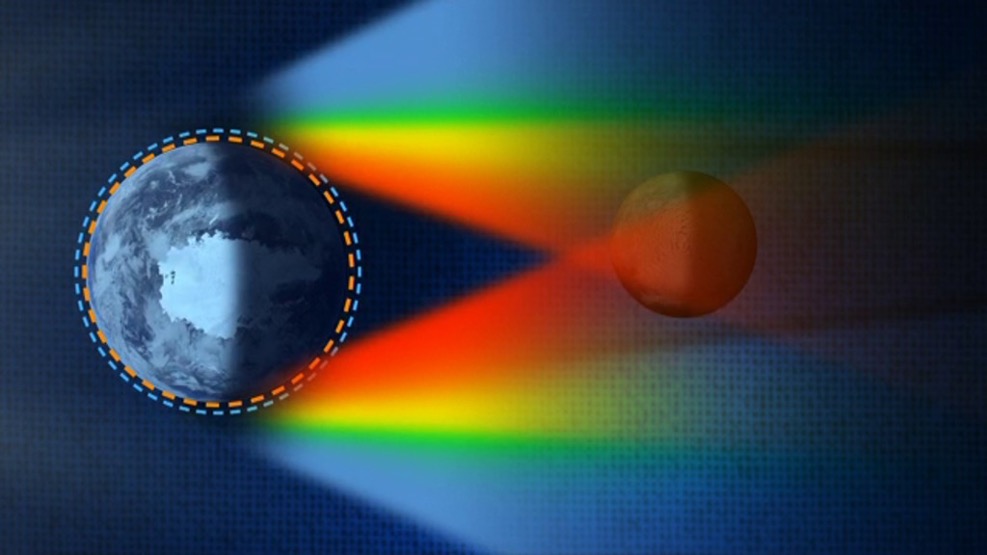
During a lunar eclipse, Earth’s atmosphere scatters sunlight. The blue light from the Sun scatters away, and longer-wavelength red, orange, and yellow light pass through, turning our Moon red. *This image is not to scale. Credit: Goddard Space Flight Center/Scientific Visualization Studio
🎨 What Will This Eclipse Look Like?
This eclipse is a deep partial — about as close to total as a partial eclipse can get! With an umbral magnitude of 0.932, roughly 96% of the Moon’s area is swallowed by Earth’s dark umbra at maximum. The Moon’s center passes south of the shadow’s core, which means:
- 🔴 The southern and central portions of the Moon will glow deep red-copper, just like during a total eclipse
- ⚪ A thin sliver of the Moon’s northern limb stays outside the umbra, blazing brilliant white against the reddened disk
- 🎨 The contrast between the bright sliver and the shadowed disk is a striking, photogenic sight — an “almost Blood Moon” with a diamond edge!
Because a sliver of direct sunlight always remains, the sky won’t get as dark as during totality — but that bright edge next to the copper glow creates a dramatic 3-D “spotlight” effect that many observers find just as memorable. 📸✨
⚠️ The Finale of an Almost-Tetrad!
This deep partial eclipse is the fourth act in a remarkable run of lunar eclipses spanning 2025–2026 — and it just barely misses making it a tetrad (four consecutive total lunar eclipses):
- 🌕 March 13–14, 2025 — Total lunar eclipse
- 🌕 September 7–8, 2025 — Total lunar eclipse
- 🌕 March 3, 2026 — Total lunar eclipse
- 🌗 August 28, 2026 — Deep partial (93%!) ← You are here!
So close! Just 7% more and this would have completed a tetrad. After this eclipse, the next total lunar eclipse won’t occur until December 31, 2028 / January 1, 2029 — so this “almost Blood Moon” is your last good look at a deeply reddened Moon for nearly two and a half years. If you can see it, make the effort! 🗓️✨
Eclipse Season: What Is It?
Did you know that eclipses don’t just happen randomly throughout the year? They occur in what’s called Eclipse Season! 🌑✨
Eclipse seasons are windows of time when the Sun, Earth, and Moon align just right to create eclipses. Each season lasts for about 34 to 38 days and occurs roughly every six months. During this period, there are typically two eclipses—one solar and one lunar—because of the way the Moon’s orbit intersects the Earth’s orbital plane (called the ecliptic).
The second eclipse season of 2026:
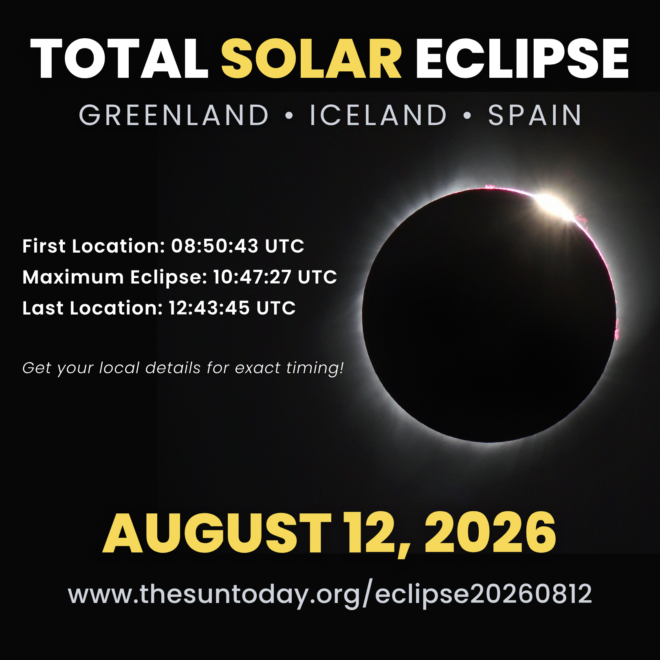
- Total Solar Eclipse on August 12, 2026 ☀️🌑: The headline eclipse of the year! Totality swept from the Arctic across Greenland and Iceland to northern Spain — the first total solar eclipse in continental Europe since 2006! 🇮🇸🇪🇸
- Partial Lunar Eclipse on August 28, 2026 🌕🌗: A deep partial — 93% of the Moon in shadow — visible across the Americas, Europe, Africa, and the Middle East. You are here!
Earlier in 2026, the first eclipse season delivered:
- Annular Solar Eclipse on February 17, 2026 ☀️💍: An extraordinary “ring of fire” eclipse confined almost entirely to Antarctica — one of the most remote central eclipses in modern history.
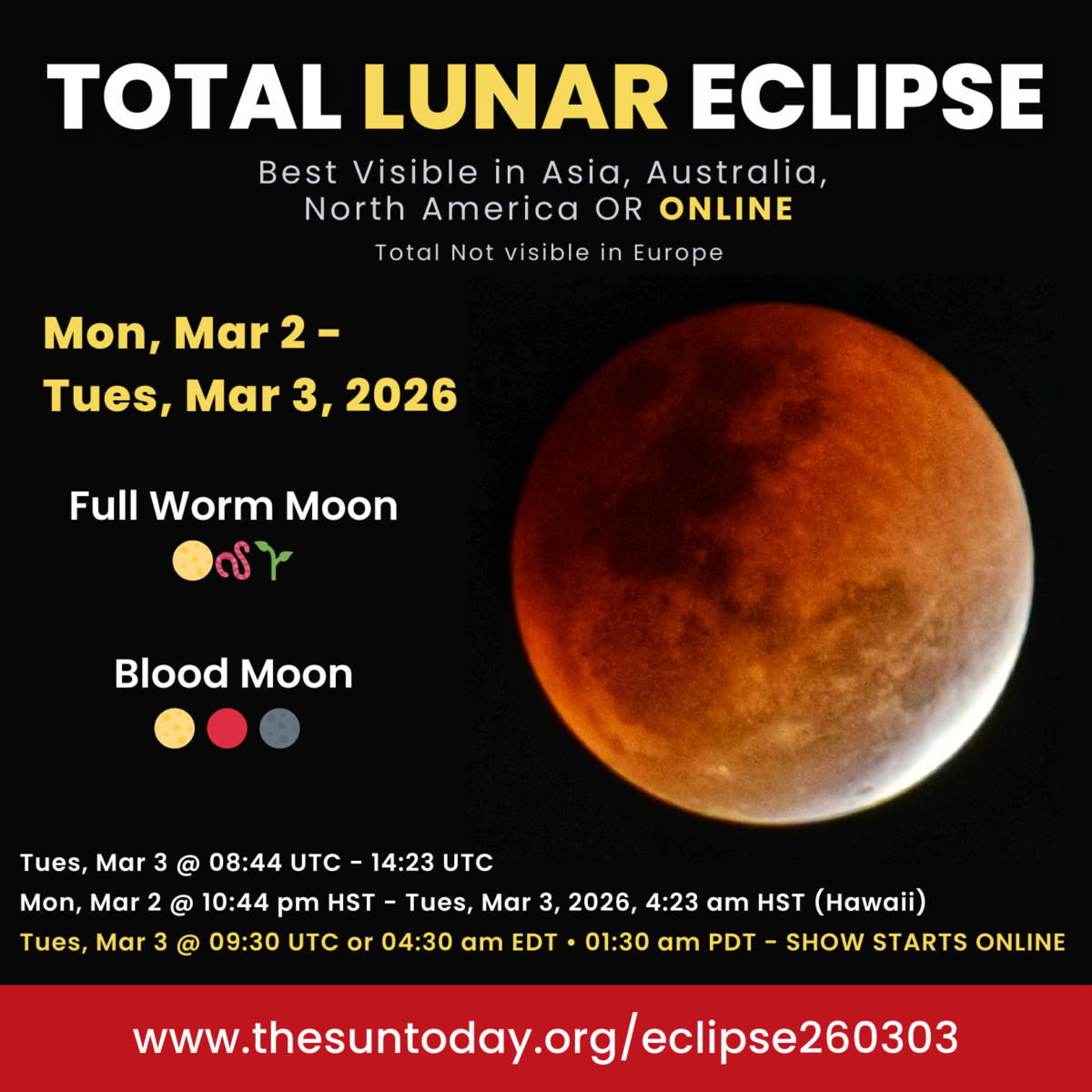
- Total Lunar Eclipse on March 3, 2026 🌕🌑: A spectacular Blood Moon visible across the Pacific Rim, with nearly an hour of totality — the last total lunar eclipse until late 2028!
Don’t miss out on these cosmic spectacles, either in person or watching online! 🌞🌑
The August 2026 Full Moon Timing 🌕 ⏰
How long is the Moon 100% Full?
- The Full Moon phase itself lasts only a brief moment — a few minutes when the Moon is exactly opposite the Sun.
- The Full Moon occurs at approximately 04:18 UTC on Friday, August 28, 2026 — just minutes after greatest eclipse! At this exact time, the Moon is 100% full (though 93% of it is hidden in Earth’s shadow — a “full” Moon you can barely see!).
- The Moon is 100% full for about 1–2 minutes — from 04:18 UTC to approximately 04:20 UTC (a very short time, given the precision of the alignment).
- After 04:18 UTC, the Moon begins to move slightly out of alignment, and it will no longer be exactly opposite the Sun. It will drop to approximately 99.9% full in the next few minutes, and the full illumination will start to decrease gradually.
So, the timeline looks something like this:
- 04:13 UTC: Greatest eclipse — 93% of the Moon in Earth’s umbra.
- 04:18 UTC: Full Moon (100% illumination) for about 1–2 minutes — while deep in eclipse!
- 04:20 UTC: 99.9% full, and the Full Moon glow begins its slow fade as the Moon also climbs back out of shadow.
- I’m using UTC here because this time zone best serves the global viewing audience for this eclipse.
🌕 August 28, 2026 — Lunar Eclipse Parameters 🌗
| Event | Time (UTC) |
|---|---|
| Penumbral Eclipse Begins | 2026 Aug 28 — 01:23:29 |
| Partial Eclipse Begins | 2026 Aug 28 — 02:33:21 |
| Greatest Eclipse | 2026 Aug 28 — 04:12:52 |
| Partial Eclipse Ends | 2026 Aug 28 — 05:52:09 |
| Penumbral Eclipse Ends | 2026 Aug 28 — 07:02:00 |
| Parameter | Value |
|---|---|
| Penumbral Magnitude | 1.96645 |
| Umbral Magnitude | 0.93187 |
| Gamma | 0.49644 |
| Umbral Area Coverage at Maximum | ~96.2% of the Moon’s disk |
| Partial Duration | 3 hours 18 minutes 48 seconds |
| Penumbral Duration | 5 hours 38 minutes 31 seconds |
| Moon Right Ascension | 22h 26m 06.3s |
| Moon Declination | −09°18′03.6″ |
| Moon Semi-Diameter | 15′18.2″ |
| Moon Equatorial Horizontal Parallax | 0°56′09.9″ |
| Constellation | Aquarius ♒ |
| ΔT | 72.3 s |
📚 For lunar eclipses, the penumbral magnitude measures how deep the Moon goes into Earth’s faint outer shadow, while the umbral magnitude (0.932) shows how much of the Moon’s diameter enters the darker, central shadow. A value just below 1.0 means the Moon is almost fully immersed — that’s what makes this a deep partial rather than a total lunar eclipse! 🌗✨
🔄 Saros 138: A Series on the Verge of Totality ⏳
This eclipse belongs to Lunar Saros 138 — a family of eclipses that began with a penumbral eclipse on October 15, 1521 and will continue until around March 30, 2982 — a span of more than 1,400 years! This is member 29 of 82 in the series (per EclipseWise), and its partial eclipses have been getting deeper with each 18-year cycle.
Watch the progression: the previous member was the partial eclipse of August 16, 2008 (umbral magnitude 0.81), this one reaches 0.93, and the next — on September 7–8, 2044 — finally crosses the line to become the series’ first total lunar eclipse! We’re witnessing a Saros family mature right before our eyes. 🔮
🌕🔴🌗 An “Almost” Blood Moon
A Blood Moon occurs during a total lunar eclipse, when the Earth casts its shadow on the Moon, turning it a striking red hue. 🔴 This eclipse comes tantalizingly close — with 93% of the Moon inside the umbra, most of the disk will take on that deep, rusty color as Earth’s atmosphere bends sunlight, filtering only the red wavelengths onto the Moon’s surface. 🌑🌕 The bright uneclipsed sliver keeps this from being a true Blood Moon, but the pairing of copper-red shadow and dazzling white edge is a rare beauty all its own — transformation with a silver lining, quite literally. 🌗🔴
Beyond the Science…
🐟🌕 Sturgeon Moon
The Sturgeon Moon is the August full moon, named by fishing tribes around the Great Lakes and Lake Champlain for the giant lake sturgeon that were most readily caught during this part of summer. 🐟🌊 These prehistoric-looking fish — living fossils that have swum North America’s waters for over 100 million years — were a vital food source, and their abundance in late summer gave this moon its name. Across many cultures, the August full moon has carried names tied to ripening crops and the coming harvest: the Corn Moon, the Grain Moon, and the Red Moon (for the reddish hue it takes on through summer haze — extra fitting this year!). 🌽🌾
In 2026, the Sturgeon Moon arrives with a cosmic flourish — sliding 93% into Earth’s shadow just two weeks after the great total solar eclipse of August 12. What an eclipse season finale! 🌕🌗✨
Here are some other names for the August Full Moon:
| Name | Culture/Region | Origin/Meaning |
| Sturgeon Moon | Indigenous (Algonquin, Great Lakes) |
Named for the giant lake sturgeon most easily caught in late summer. |
| Corn Moon | Indigenous (Various Tribes) |
Marks the time when corn ripens and is ready for harvest. |
| Grain Moon | Anglo-Saxon | Signals the season of gathering ripening grain. |
| Red Moon | Old European Tradition | For the reddish hue the Moon often takes rising through summer haze. |
| Barley Moon | Old English/European | The time to harvest barley and celebrate the first grain harvest. |
| Fruit Moon | Indigenous (Various Tribes) |
Berries and fruits reach their peak ripeness. |
| Lightning Moon | Celtic Tradition | Named for the frequent summer thunderstorms of August. |
| Dispute Moon | Celtic Tradition | A time when disagreements were traditionally aired and settled. |
🌕 Sturgeon Moon Eclipse: A Season’s Grand Finale 🌗
On the night of August 27–28, 2026, the Sturgeon Moon will bring not just its late-summer glow but the deepest lunar eclipse until the very end of 2028. For observers across the Americas — from Toronto to Buenos Aires, from New York to Los Angeles — this is a night to step outside and look up. 🌎✨
🌿 Astrological Vibes: Release & Completion
Eclipses are often seen as cosmic turning points — moments to clear out what no longer serves us and invite in growth and transformation. 🌱💫 As this lunar eclipse in Pisces unfolds, it invites us to release old emotional patterns, trust our intuition, and dissolve boundaries that no longer serve. With the Virgo Sun across the sky, the message is about balance — pairing dreamy, compassionate insight with grounded, practical action. 🐟✨
🌟 Cosmic Close: Summer’s Turning Point
Arriving in the final days of northern summer, this eclipse closes the books on 2026’s extraordinary eclipse year. Ancient cultures viewed eclipses as moments of transformation — the darkening of the Moon followed by its return to brightness echoing the turning of the seasons from summer abundance toward autumn harvest. 🌗➡️🌕🌾
🌠 Look Up & Connect
Whether you’re watching from a rooftop in New York, a beach in Rio, a desert in Arizona, or catching the setting eclipsed Moon from Lisbon or Marrakesh, you can join in the collective awe. Ancient cultures viewed eclipses as sacred events, charged with divine energy. Today, we can honor that same tradition by pausing, looking up, and connecting — whether through livestreams, meditation, or simply stepping outside to feel the night sky’s quiet power. 🌙💻💫
🌾 From Sturgeon Moon to Equinox
This eclipse falls during the Sturgeon Moon, August’s full moon tied to abundance and the first stirrings of harvest. 🐟 With the autumnal equinox arriving September 22, this deep partial eclipse marks a powerful seasonal pivot — a moment of release before the balance of light and dark shifts toward crisp days and long nights. It’s a chance to gather what you’ve grown before the season turns. 🌕🌾🍂
The world is chaotic, so let’s hope you can pause and do a personal reset, if only for a moment.