🌞 An Annular Eclipse for Penguins, Not People! 🐧🌑
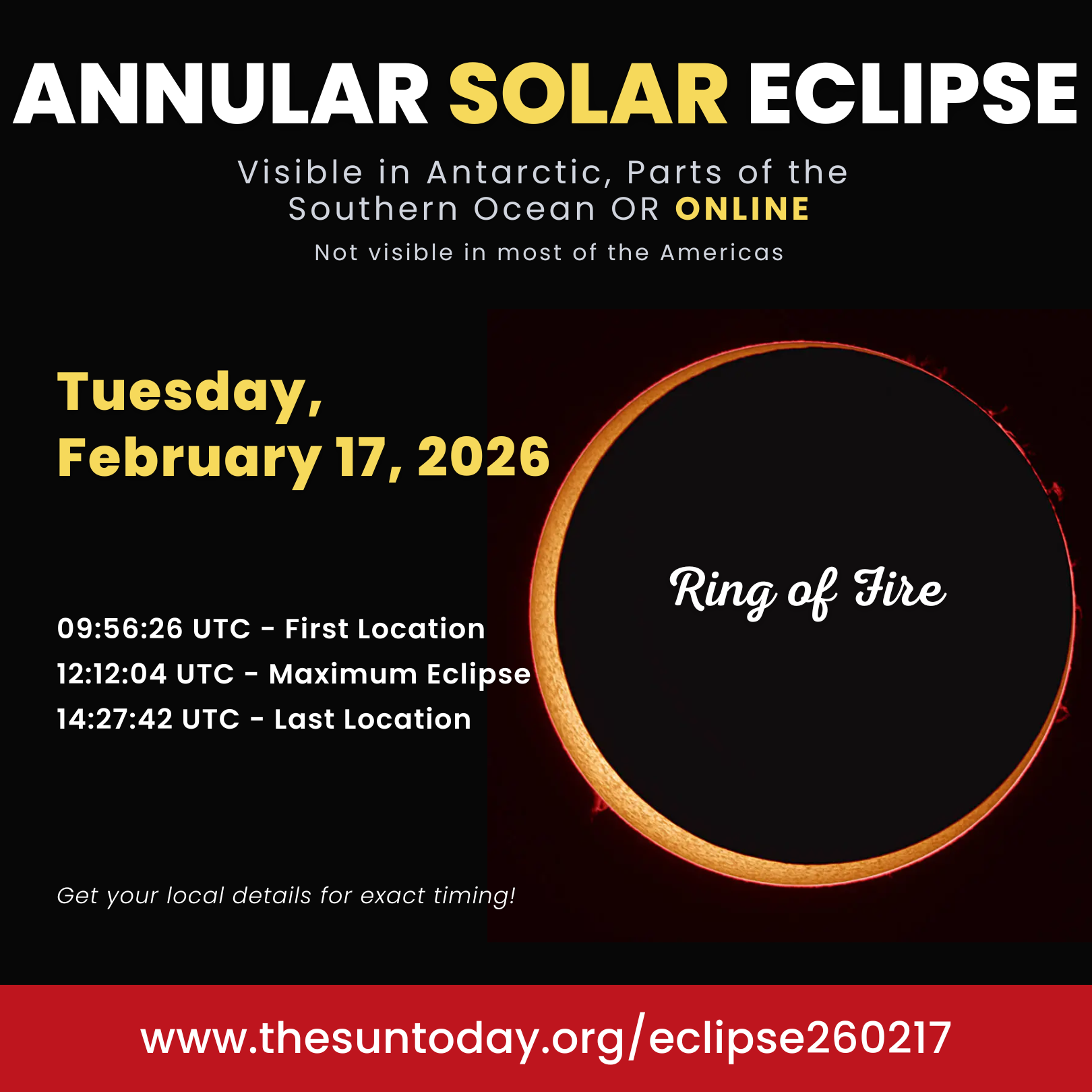
On Tuesday, February 17, 2026, the Moon will pass directly in front of the Sun — but not quite cover it completely — creating a stunning “ring of fire” annular eclipse. There’s just one catch: almost nobody will see it in person. 🧊✨
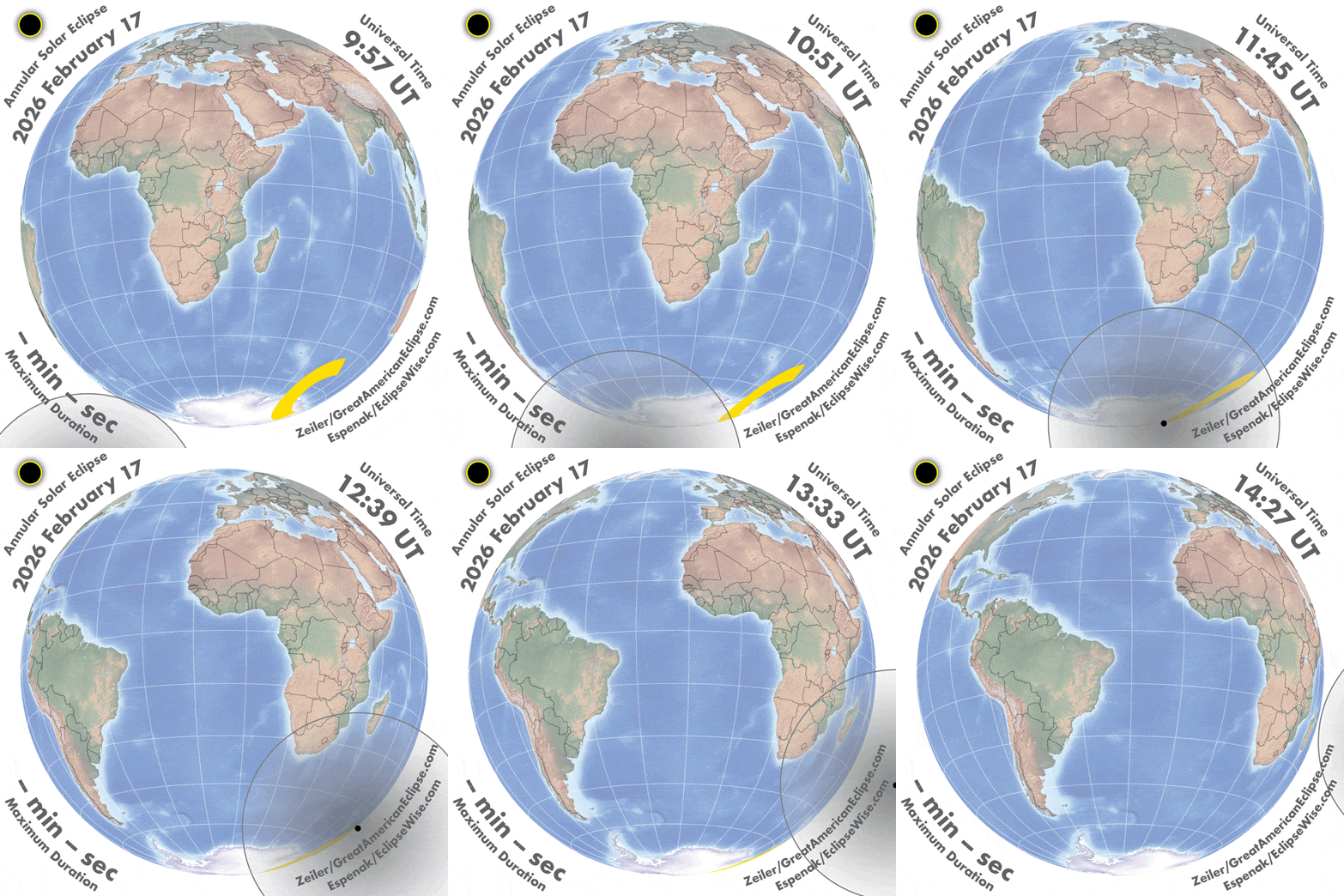
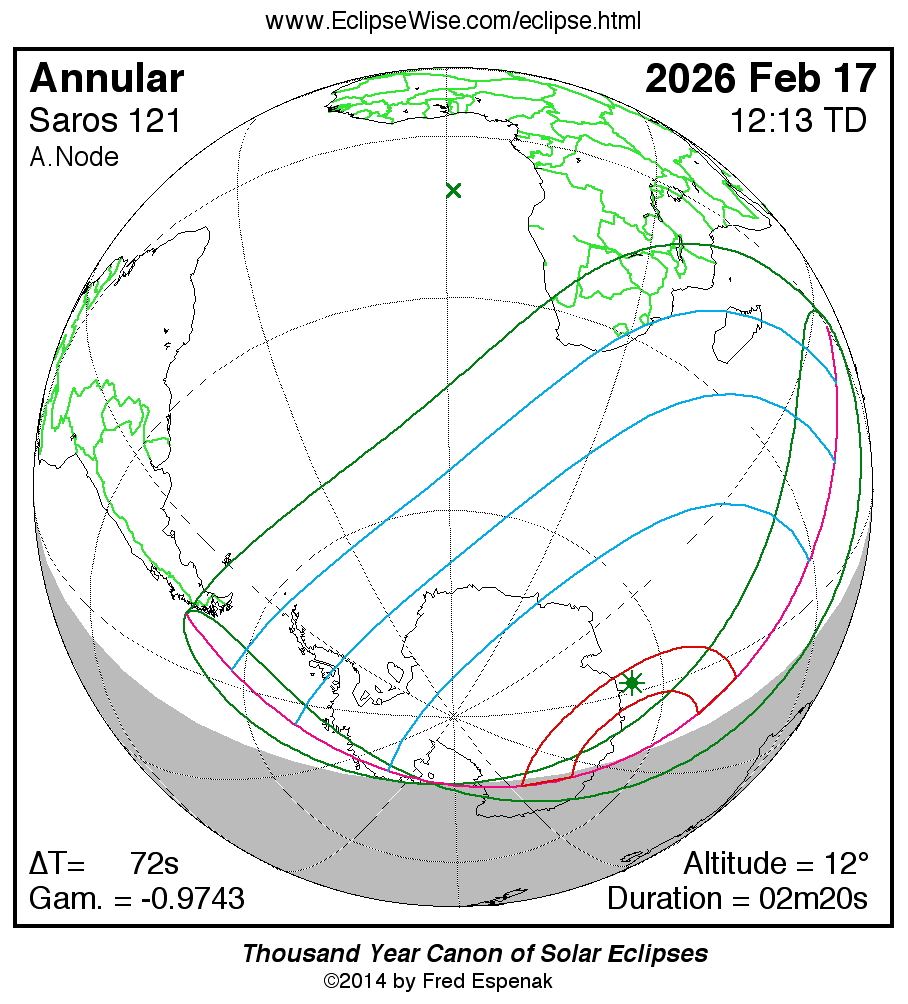
The entire path of annularity runs across East Antarctica and the Southern Indian Ocean, touching no populated towns or cities. This will likely be one of the least human-observed central solar eclipses in recorded history — with fewer than 20 people witnessing the ring of fire in person! 🤯
🌟 What Makes This Eclipse Special? 💍
This is the first solar eclipse of 2026, and it opens one of the most exciting eclipse seasons in decades. The Moon will block 92.7% of the Sun’s disk area at maximum — creating a dazzling ring of sunlight around its dark silhouette. With a maximum annularity of 2 minutes 20 seconds and an annular path 616 km wide, the geometry is dramatic — but the audience is almost entirely penguins. 🐧☀️💍
🕒 Timing
The eclipse runs from 09:56 to 14:27 UTC (4:56–9:27 a.m. EST). The ring of fire is visible on Earth for only about 59 minutes (11:42–12:41 UTC), confined entirely to Antarctica. 🌑☀️
🔭 Where Can You See It?
This eclipse is about as remote as it gets. The central path of annularity is confined entirely to East Antarctica and the Southern Indian Ocean:
- 🐧 Inside the “Ring of Fire” Path:
- Concordia Station (French-Italian, Dome C) — ~2 min 1 sec of annularity, Sun just ~5° above the horizon
- Mirny Station (Russian, Queen Mary Land) — ~1 min 52 sec of annularity, Sun at ~10°
- 🌤️ Partial Eclipse Views:
- McMurdo Station (Antarctica) — ~86% coverage
- Southern South America — Tierra del Fuego, Punta Arenas, and Ushuaia
- Southern Africa — (, Johannesburg, Durban), Mozambique, Madagascar, Lesotho, Botswana, Zimbabwe
- Indian Ocean Islands — Réunion, Mauritius, Seychelles, Comoros, Kerguelen
- ❌ No visibility from North America, , Asia, or
- ☀️ The best way for most people to watch is online!
Watch the Event Live – Telescope Views & Commentary
Live Broadcast from timeanddate.com –
starting at Tuesday, February 17: 4:30 am EST (9:30 am UTC/GMT)
Locations Where the Eclipse Is Visible
| Location | Type | Details | Notes |
| 🐧 Annular (“Ring of Fire”) Path | |||
| Concordia Station, Antarctica | Annular Solar Eclipse | ~2 min 1 sec annularity | Sun ~5° alt |
| Mirny Station, Antarctica | Annular Solar Eclipse | ~1 min 52 sec annularity | Sun ~10° alt |
| 🇦🇶 Antarctica — Partial Views | |||
| Casey Station | Partial Solar Eclipse | Deep partial | |
| McMurdo Station | Partial Solar Eclipse | ~86% coverage | |
| Marambio Base | Partial Solar Eclipse | ||
| Orcadas | Partial Solar Eclipse | ||
| 🌎 South America | |||
| Punta Arenas, | Partial Solar Eclipse | Southern tip of South America | |
| Ushuaia, Argentina | Partial Solar Eclipse | Tierra del Fuego | |
| 🌍 Southern Africa | |||
| Cape Town, South Africa | Partial Solar Eclipse | ||
| Johannesburg, South Africa | Partial Solar Eclipse | ||
| Durban, South Africa | Partial Solar Eclipse | ||
| Port Elizabeth, South Africa | Partial Solar Eclipse | ||
| Marion Island, South Africa | Partial Solar Eclipse | Prince Edward Islands | |
| Maputo, Mozambique | Partial Solar Eclipse | ||
| Harare, Zimbabwe | Partial Solar Eclipse | ||
| Gaborone, Botswana | Partial Solar Eclipse | ||
| Maseru, Lesotho | Partial Solar Eclipse | ||
| Mbabane, Eswatini | Partial Solar Eclipse | ||
| 🌊 Indian Ocean & East Africa | |||
| Antananarivo, Madagascar | Partial Solar Eclipse | ||
| Toamasina, Madagascar | Partial Solar Eclipse | ||
| Port Louis, Mauritius | Partial Solar Eclipse | ||
| Saint-Denis, Réunion | Partial Solar Eclipse | ||
| Moroni, Comoros | Partial Solar Eclipse | ||
| Mamoudzou, Mayotte | Partial Solar Eclipse | ||
| Victoria, Seychelles | Partial Solar Eclipse | ||
| Lilongwe, Malawi | Partial Solar Eclipse | ||
| Port-aux-Français, Kerguelen | Partial Solar Eclipse | ||
| 🏝️ Other Locations | |||
| King Edward Point, South | Partial Solar Eclipse | ||
| Bouvet Island, Norway | Partial Solar Eclipse | ||
| Diego Garcia, BIOT | Partial Solar Eclipse | ||
🌍 The Cool Science Behind the Eclipse 🧑🔬
- Why Annular and Not Total? – The Moon is 6.8 days past apogee (its farthest point from Earth), so it appears about 4% smaller than the Sun in the sky. That size difference means the Moon can’t fully cover the Sun, leaving a brilliant ring of sunlight around its silhouette. The Moon/Sun diameter ratio is 0.960 — close, but not enough for totality! 💍☀️
- Obscuration vs. Magnitude – Confused by the terms? Let’s break it down! 📚
- Obscuration (92.7%) is how much of the Sun’s disk area is covered by the Moon.
- Magnitude (0.963) is how much of the Sun’s diameter is covered.
- A magnitude less than 1.0 means the Moon is too small to fully cover the Sun — that’s what makes it annular!
- Why So Remote? – This eclipse has a gamma of −0.974, meaning the Moon’s shadow axis barely grazes Earth’s south polar limb. It’s about as close as an eclipse can get to missing Earth entirely and still producing a central path! The annular path is an extraordinary 616 km wide — one of the widest physically possible. 🌐
🕒 Eclipse Timeline (UTC)
| Eclipse Phase | Time (UTC) | What’s Happening |
|---|---|---|
| Penumbral First Contact (P1) | 09:56 | Moon’s outer shadow first touches Earth — eclipse begins |
| Central Line Begins (C1) | 11:48 | The “ring of fire” first appears on the horizon in East Antarctica! 🌅💍 |
| Greatest Eclipse | 12:11 | Peak — 92.7% of the Sun’s area is blocked. Sun at 12.3° altitude |
| Central Line Ends (C2) | 12:36 | The ring of fire disappears over the Southern Indian Ocean |
| Penumbral Last Contact (P4) | 14:27 | Moon’s shadow leaves Earth — eclipse is over |
📐 Detailed Eclipse Parameters
| Event | Time (UTC) |
|---|---|
| Penumbral First Contact (P1) | 2026 Feb 17 — 09:56:24 |
| Umbral First External Contact (U1) | 2026 Feb 17 — 11:42:48 |
| Central Line Begins (C1) | 2026 Feb 17 — 11:48:15 |
| Greatest Eclipse | 2026 Feb 17 — 12:11:54 |
| Central Line Ends (C2) | 2026 Feb 17 — 12:36:05 |
| Umbral Last External Contact (U4) | 2026 Feb 17 — 12:41:29 |
| Penumbral Last Contact (P4) | 2026 Feb 17 — 14:27:39 |
| Parameter | Value |
|---|---|
| Eclipse Magnitude | 0.96300 |
| Eclipse Obscuration | 0.92736 (92.7%) |
| Gamma | −0.97427 |
| Moon/Sun Diameter Ratio | 0.960 |
| Sun Right Ascension | 22h 03m 54.3s |
| Sun Declination | −11°52′42.3″ |
| Sun Semi-Diameter | 16′11.1″ |
| Sun Equatorial Horizontal Parallax | 08.7″ |
| Moon Right Ascension | 22h 05m 34.0s |
| Moon Declination | −12°42′29.5″ |
| Moon Semi-Diameter | 15′32.4″ |
| Moon Equatorial Horizontal Parallax | 0°57′18.7″ |
| ΔT | 72.2 s |
🔄 Saros 121: A Series in Its Twilight ⏳
This eclipse belongs to Solar Saros 121 — a family of eclipses that has been producing events since April 25, 944 AD. This is member 61 of 71 in the series, which means Saros 121 is nearing the end of its long life. The series will produce its final eclipse in 2206.
Saros 121 had its glory days producing total eclipses from 1070 to 1809, with the longest totality — a breathtaking 6 minutes 20 seconds — occurring on June 21, 1629. Now in its annular phase, the series is winding down. The previous eclipse in this family was the annular eclipse of February 7, 2008, and the next will be February 28, 2044.
🚀 How to Watch Safely 👓
IMPORTANT! Even during an annular eclipse, remember: at no time is the Sun safe to view with the naked eye. The “ring of fire” means direct sunlight is always visible — unlike a total eclipse, there are no safe moments without proper protection. 🚫👓
- 🌟 Eclipse Glasses – Must be certified ISO 12312-2. These are your best friend! 🕶️
- 🌙 Pinhole Projector – Fun DIY way to safely observe the eclipse! You’ll see the ring shape projected! 🎨
- 👁️ Never Use Sunglasses – Regular sunglasses, even very dark ones, don’t protect your eyes! 🚫
- 💻 Watch Online – For this Antarctica-only annular eclipse, livestreams are the best option for most people! 🌍
PROTECT YOUR EYES!
Unlike a total solar eclipse, at no time during an annular eclipse will this be safe to view with the naked eye. The “ring of fire” always leaves direct sunlight exposed. Be sure to carefully read the details to understand how to protect your eyes! Homemade filters or ordinary sunglasses, even very dark ones, are not safe for looking at the uneclipsed or partially eclipsed Sun.
Eclipse Season: What Is It?
Did you know that eclipses don’t just happen randomly throughout the year? They occur in what’s called Eclipse Season! 🌑✨
Eclipse seasons are windows of time when the Sun, Earth, and Moon align just right to create eclipses. Each season lasts for about 34 to 38 days and occurs roughly every six months. During this period, there are typically two eclipses—one solar and one lunar—because of the way the Moon’s orbit intersects the Earth’s orbital plane (called the ecliptic).
The first eclipse season of 2026:
- Annular Solar Eclipse on February 17, 2026 ☀️💍: An extraordinary “ring of fire” eclipse confined almost entirely to Antarctica — one of the most remote central eclipses in modern history. Only a handful of researchers will witness annularity in person!
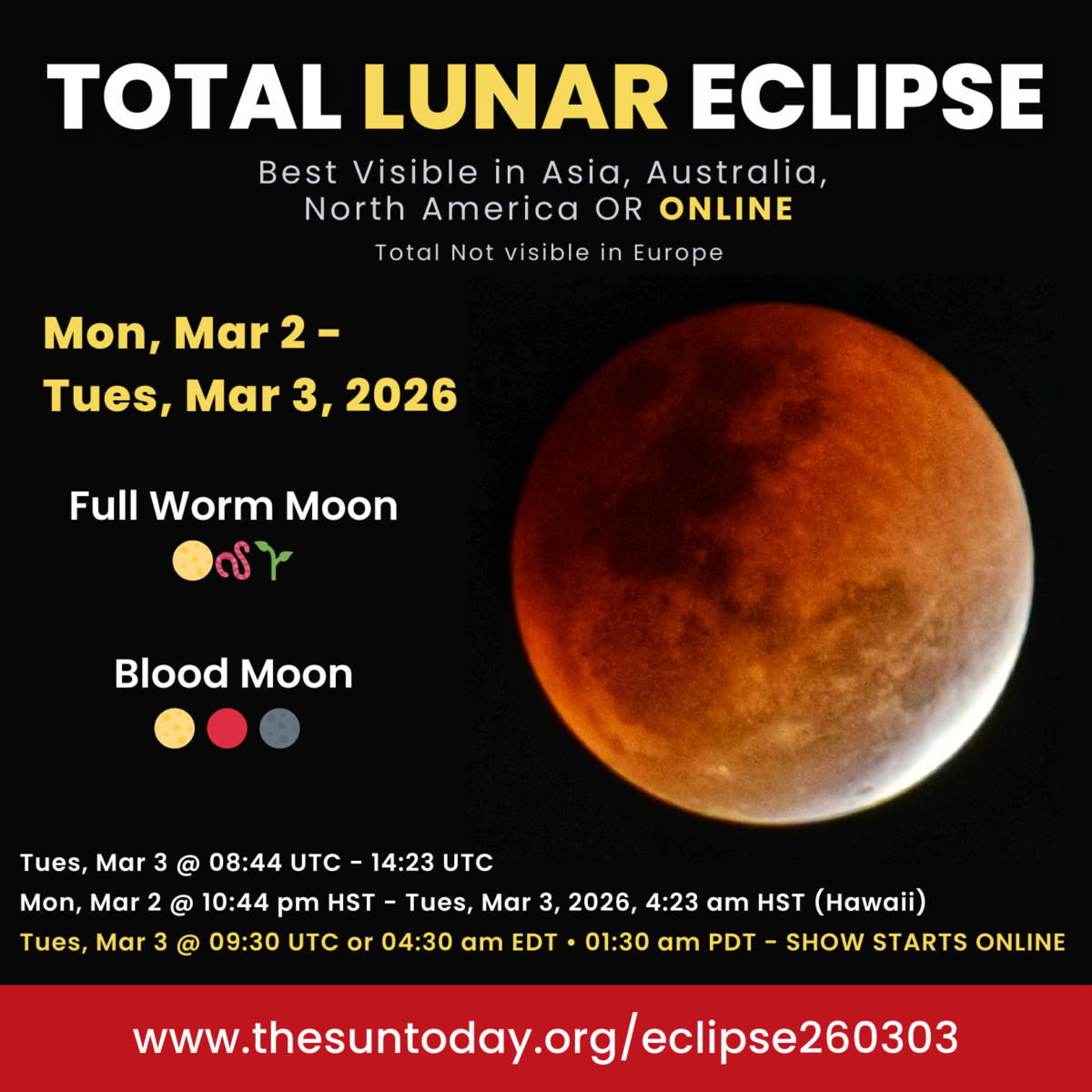
- Total Lunar Eclipse on March 3, 2026 🌕🌑: A spectacular Blood Moon visible across the Pacific Rim, with nearly an hour of totality. This is the last total lunar eclipse until late 2028!
A second eclipse season occurs later in 2026:
- Total Solar Eclipse on August 12, 2026 ☀️🌑: The headline eclipse of the year! Totality sweeps from Greenland across Iceland to — the first European totality in over a decade. Mark your calendars — this is the big one! 🇮🇸🇪🇸
- Partial Lunar Eclipse on August 28, 2026 🌕🌗: Visible across the Americas, , Africa, and Asia.
Don’t miss out on these cosmic spectacles, either in person or watching online! 🌞🌑
🐧 The Loneliest Eclipse
With this eclipse playing out before an audience of Antarctic researchers, emperor penguins, and the vast Southern Ocean, it feels extra symbolic — a cosmic reminder that the universe doesn’t perform just for us. ✨🌊⚖️ The same orbital geometry that produces this ultra-remote solar eclipse also delivers a widely visible total lunar eclipse two weeks later on March 3.
🌞 Final Thoughts: Get Ready for an Incredible Eclipse Year! 🌑
The February 17, 2026 annular solar eclipse may be the loneliest eclipse of the decade — but it’s the opening act of one of the most exciting eclipse stretches in years. With a total lunar eclipse on March 3, a total solar eclipse across Iceland and on August 12, and the “Eclipse of the Century” coming in August 2027, we’re entering a golden age for eclipse watchers. 🌞✨
Even if you can’t see this one from your backyard (and almost no one can!), it’s a beautiful reminder of the elegant clockwork of our solar system. Use this as a chance to learn more about how eclipses work, share the wonder with friends and family, and start planning for the big ones ahead. 🌑🔭🌟
🔗 For More Info:
For a closer look at the eclipse path, times, and maps, head over to these awesome resources:
- The Sun Today: Annular Solar Eclipses
- Time and Date: February 17, 2026 Annular Solar Eclipse
- EclipseWise: February 17, 2026
🌞🌑 Stay safe, stay curious, and enjoy the eclipse magic! 🌟